
The biodiversity stripes I shared recently have been very popular. This follow-up post shares another set of stripes that help show why the human-nature relationship has failed and biodiversity is falling.
First, a reminder that the biodiversity stripes were based on the the Living Planet Index which tells us that the population of mammals, birds, fish, amphibians and reptiles has seen an average drop of 68% globally since 1970. The global stripes start green in 1970 and turn grey as we enter the 2000s.

Global Bio Stripes – Data: Living Planet Index http://stats.livingplanetindex.org/
We know that at the personal level a close relationship with nature is built on five types of engagement with nature. From simply engaging with nature through noticing it, to a deep, emotional and meaningful relationship, where we celebrate and share how nature brings meaning to our lives. Here nature appears in what we write. So it follows that as nature, represented by biodiversity, declines, opportunities to engage with nature also decline and nature has less meaning in our lives. A situation shown by the frequency of nature words appearing in English. Shown below by stripes showing how the frequency of the word ‘nature’ in English has fallen since 1800.

Nature Usage Stripes: findingnature.org.uk – Data: Google Ngram Viewer: ‘[nature]’, 1800-2019 in English
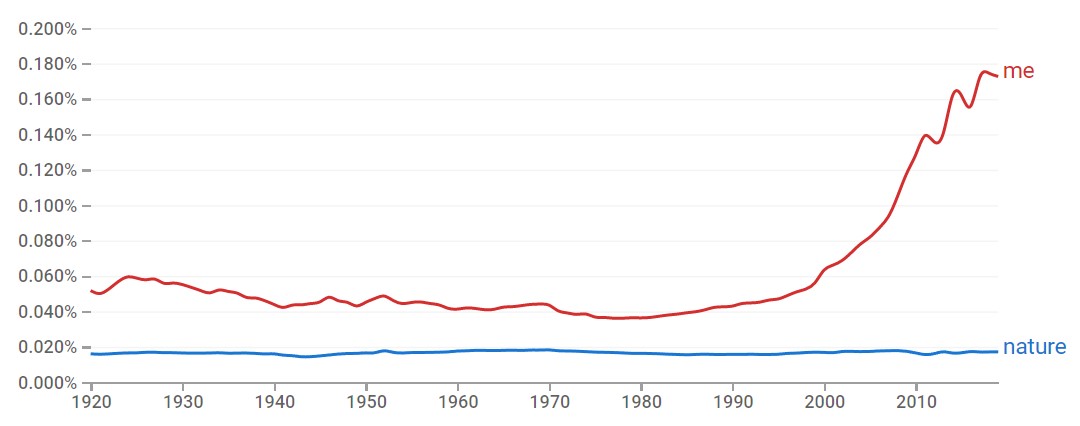
Usage of ‘nature’ and ‘me’ – Google Ngram Viewer: ‘[nature]’, ‘[Nature]’, ‘[NATURE]’, ‘[me]’, 1920-2019 in English.
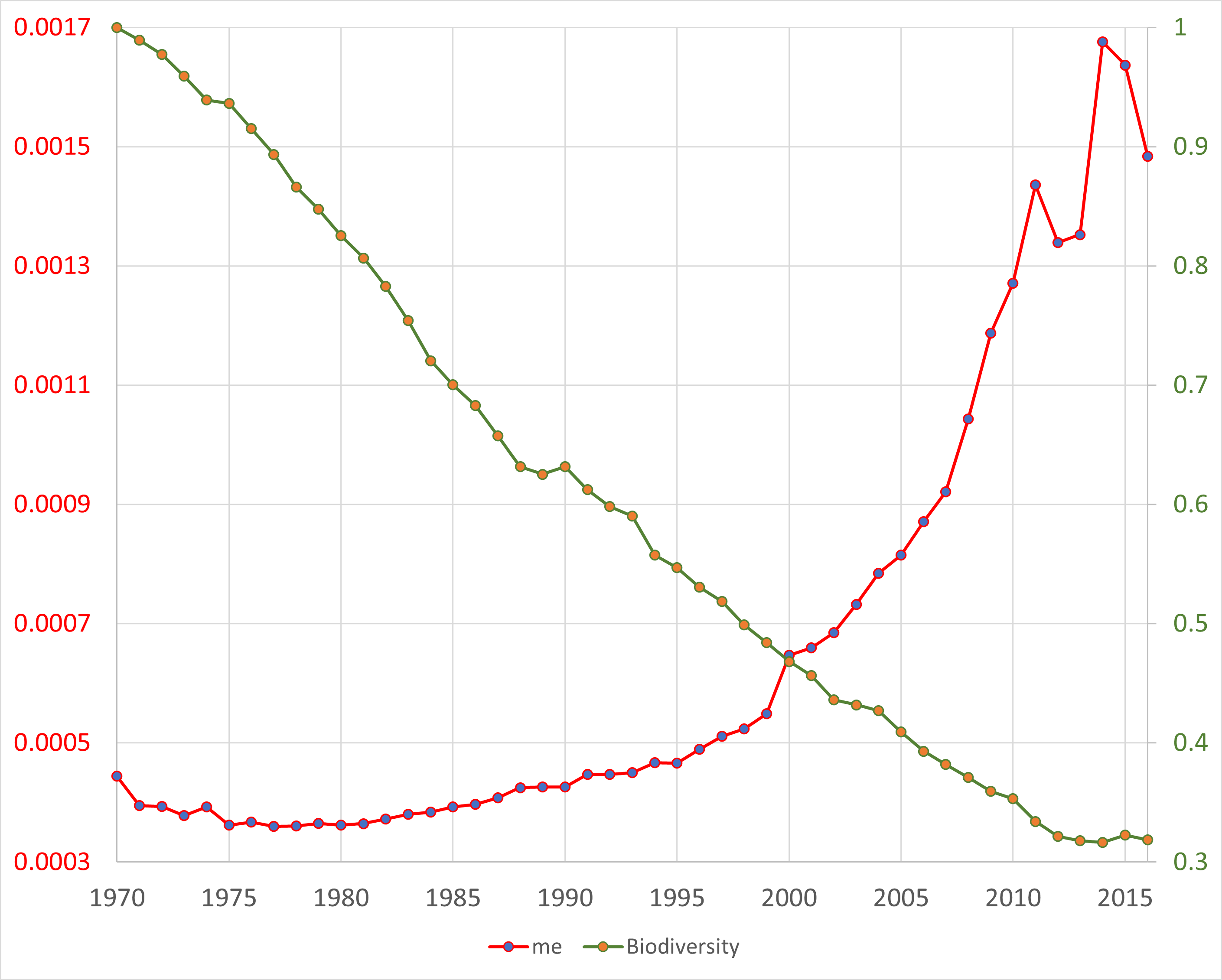
The decline of biodiversity and rise of ‘me’ since 1970. Data: Living Planet Index http://stats.livingplanetindex.org/ – Google Ngram Viewer: ‘[me]’, 1970-2016 in English.
As biodiversity falls and becomes more distant, nature matters less. We celebrate and write about it less in a spiral of decline. Instead, it would seem we celebrate and write about ourselves. People need to feel part of something and worthwhile, but a close relationship with nature provides that too – explaining the feeling that one’s life is worthwhile four times more than socio-economic status. Nature’s recovery and biodiversity matters.


 Finding Nature