
Two years ago today I made an unexpected discovery. This blog post is a more personal story, a departure from the usual content, although all about connections. A story shared to the Internet in the hope that one day it might lead to the completion of a very difficult puzzle, or maybe a photo to illustrate the story.
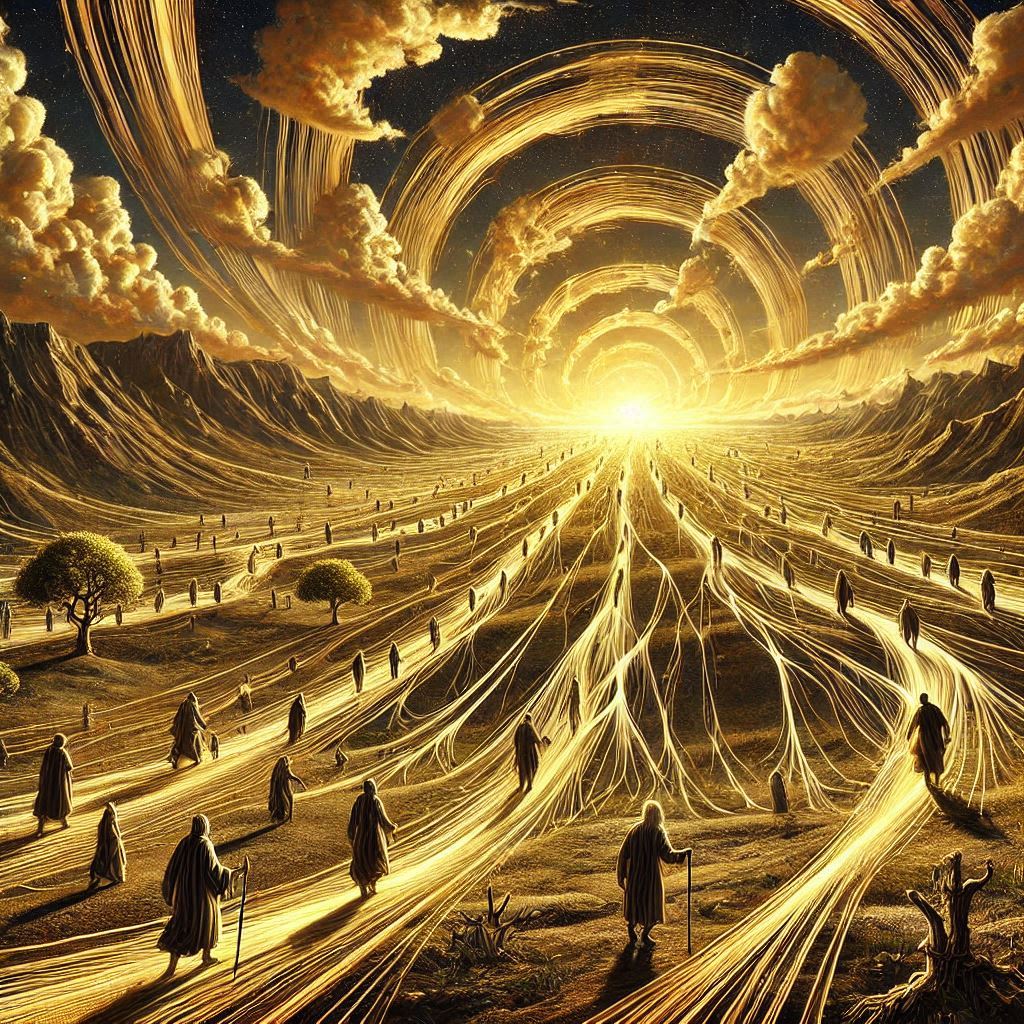
In Reconnection I considered the history of our failing relationship with nature. A journey from the landscape of evolution, hunter-gatherers and through revolutions of farming and industry. Very often difficult lives, but successful ones given the 10,000 or so generations that have led to our co-existence here and now. The success of our parents, their parents and the thousands of others who came before represents a thread of life. I’ve always been keen to trace these threads. My father’s family of pipe organ builders from Marylebone in London and my mother’s family that has lived locally for centuries.
Threads
After finishing writing Reconnection and having hit the buffers in my family tree research, I took a DNA test in the hope of finding out more. And I found out more than I ever imagined, the father who brought me up, was not my biological father. My family tree was suddenly missing a branch. However, the results that took away so much in one instant, also revealed very little about my biological father. My DNA matches were mainly 4th and 5th cousins.
The story of the search has taken many twists and turns and is still incomplete. This blog doesn’t tell the story of the search, that’s for another time, it simply shares where we’ve got to in the hope that this thread on the Internet might be picked up one day by someone researching some of the names that follow.
I say “we” as the search is complex, involving specialist skills. I called upon the Executive Director of GenGenies.org and investigative genetic genealogist, Britta Brewer, based in the US. She was able to sort and triangulate hundreds of the small matches from the various consumer databases that have my DNA results.
These DNA facts, together with clues from the sports columns of 1960s newspaper archives, helped identify truths and untruths, link people by time and place and refine the search. Such that a possible father did genetically line up with many of my probable paternal grandmother’s other descendants. So, it seems likely from piecing together the distant DNA matches, that my paternal grandmother could be Alice Whorwood who was born on 4 April 1910 in Two Gates, Tamworth. She married William Edward Adcock, they had three children and Alice died on 7 April 1977 in Lichfield, Staffordshire. Britta and I are at a point where my likely newfound cousins will need to take test to confirm the findings, but that is not a straightforward request!
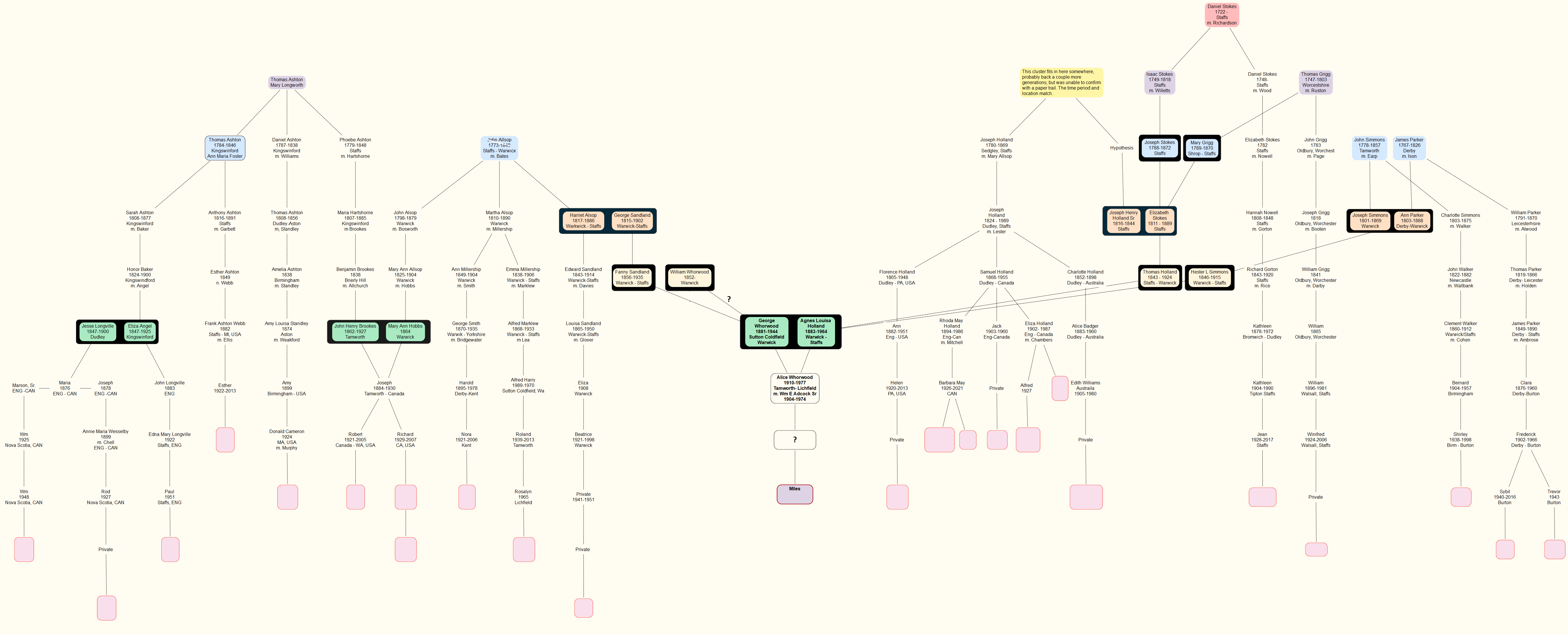
How distant DNA matches (pink boxes) come together to identify ancestors
So, before wrapping up the story, here goes with several names and relationships, those threads that others might find via Google and pick-up.
Alice’s mother was Agnes Louisa Holland, born 15 September 1883 also in Two Gates. She married George Whorwood in January 1904 in Tamworth. They had eight children, so plenty of descendants who might take a DNA test to help confirm my paternal line, or otherwise. Agnes died on 30 September 1964.
There are several distant DNA matches that support my ancestors on this side being Holland’s, Stokes’, Simmons’ and Parker’s from the Warwickshire and Staffordshire area.
Agnes was the daughter of Thomas Holland, born April 1842 in West Bromwich. He died on 5 September 1924 in Tamworth having many children with Hesther Simmons, born 6 August 1846 in Wilnecote, Warwickshire and died in April 1915 in Tamworth.
Back to Alice and her husband, and my great grandfather, George Whorwood, born on 27 February 1881 in Fazeley, Staffordshire. He died on 4 March 1943 in Sutton Coldfield, Warwickshire and was buried in Tamworth, Staffordshire.
Again, there are many distant DNA matches to support this paternal line, via his mother, my likely 2nd great grandmother, Fanny Sandland born on 5 July 1856 in Wilnecote, Warwickshire. She died in July 1935 in Tamworth and her mother Harriet Alsop, my potential 3rd great grandmother, born 25 January 1817 in Polesworth, Warwickshire, died in April 1886 in Tamworth once again.
That’s my paternal grandmother’s line, mainly miners and labourers. The paternal grandfather line is more complex. Some DNA matches line up with my paternal grandfather’s mother, but his father is missing matches, meaning his father is also likely different to the paper trail. This complicates the search, but the overwhelming DNA evidence pointing toward my likely father negates the one missing link.
What we do know is that line is descended from my 3rd great grandfather James Brockley, born in 1828 in Wolstanton, Staffordshire. A farmer of 296 acres, he died in January 1907 in Newport, Shropshire. He married Sarah Frost born in 1830 in Wolstanton, who died in 1895.
My closest DNA match, a 2nd or 3rd cousin is on this side, suggests that a descendant of Joseph Nield and Mary Tatton could be linked to Alice Whorwood, several lived in the same area around Tamworth. Like Joseph, Henry, William and Cecil Nield of Middleton.
Joseph Nield was born on 10 October 1874 in Wolstanton, Staffordshire. He married Mary Tatton on 31 October 1893 and they lived in Middleton, Warwickshire. Mary Tatton was born further afield in Barnes, Surrey on 22 October 1876.
So, they are the main threads. The DNA test also revealed very distant threads, mainly from England, but traces to Sweden, Norway, Germany and Ireland.
On my maternal side, I am a descendant of a European woman who lived around 13,000 years ago. Her ancestors migrated into Europe from the Middle East as the Ice Age receded. An illustration of the ever-growing tree from a few distant roots.

Wider Origins
My paternal line took a different journey domesticating plants and animals in the Fertile Crescent of the Middle East, before pushing east into Central Asia and north into the Caucasus Mountains. Some of them eventually reached the steppes above the Black and Caspian Seas. Pastoral nomads, herding cattle and sheep across the grasslands, others to the south developed bronze tools and weaponry. Around 5,000 years ago they spilled east across Siberia and down into Central Asia. To the west, they pushed down into the Balkans and to central Europe. Over time, their descendants spread from central Europe to the Atlantic coast.
The DNA threads can even identify individuals from this era, and thereby illustrate the journeys above. Like around 1 in and 100 others I’m related to an infant buried between 1379 BC and 1196 BC in Kazakhstan. And also, a few centuries later, a man of the Tagar culture, an Early Iron Age culture that farmed in southern Siberia.
Fast forward, a thousand years and like around 1 in 300 others, I’m related to a Seafaring Warrior from Sweden, buried with weapons in a ship after an conflict between 700 and 800 AD in Salme, Estonia. Closer still, like just a few thousand people in the UK, I’m more closely related to young Danish Viking raider of 880 AD to 1002 AD found in a mass grave of massacre victims at St. John’s College at Oxford University.
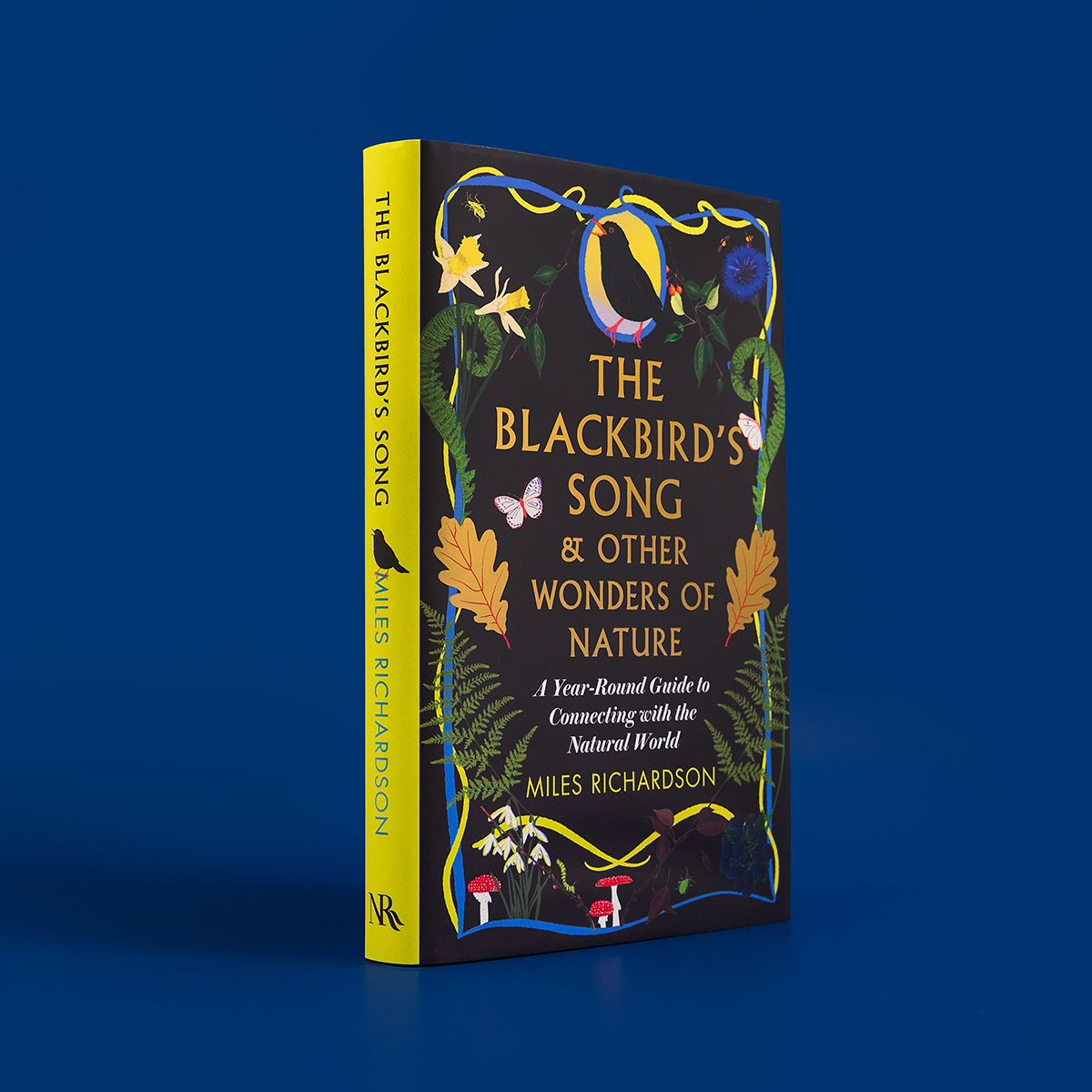
Of course, similar threads run through wildlife, but across many more generations, with far more failures as populations dwindle. Looking further back in time to our ancestors brings continuity, connects us with place and shapes our personal identity – I’ve been to Tamworth for the first time! As I explore in The Blackbird’s Song, that link to the past can be used to encourage us to look forward and think about becoming good ancestors ourselves, by restoring the natural world and our relationship with it and others.

 Finding Nature