
Dr Carly Butler & Professor Miles Richardson
Earlier this year, we introduced the idea of ‘heritage connection’ – an individual’s subjective sense of relationship with people, nature and place over time. With the support of University of Derby’s Vice-Chancellor’s Partnership Award, we’ve teamed up with the National Trust to dig deeper, asking: what is heritage connection is, why does it matter, and how can we help more people experience it?
Over the past year, we have been scoping the literature, listening to heritage professionals, and pilot-testing the first heritage connection intervention. We’re now excited to share a summary of this work in our latest report, Heritage Connection: Scoping and Sounding the Field. The report brings together key insights from published research, discussions with heritage professionals, and the results of our first heritage connection intervention. It also sets out an ambitious research agenda for advancing knowledge and supporting practice and policy.
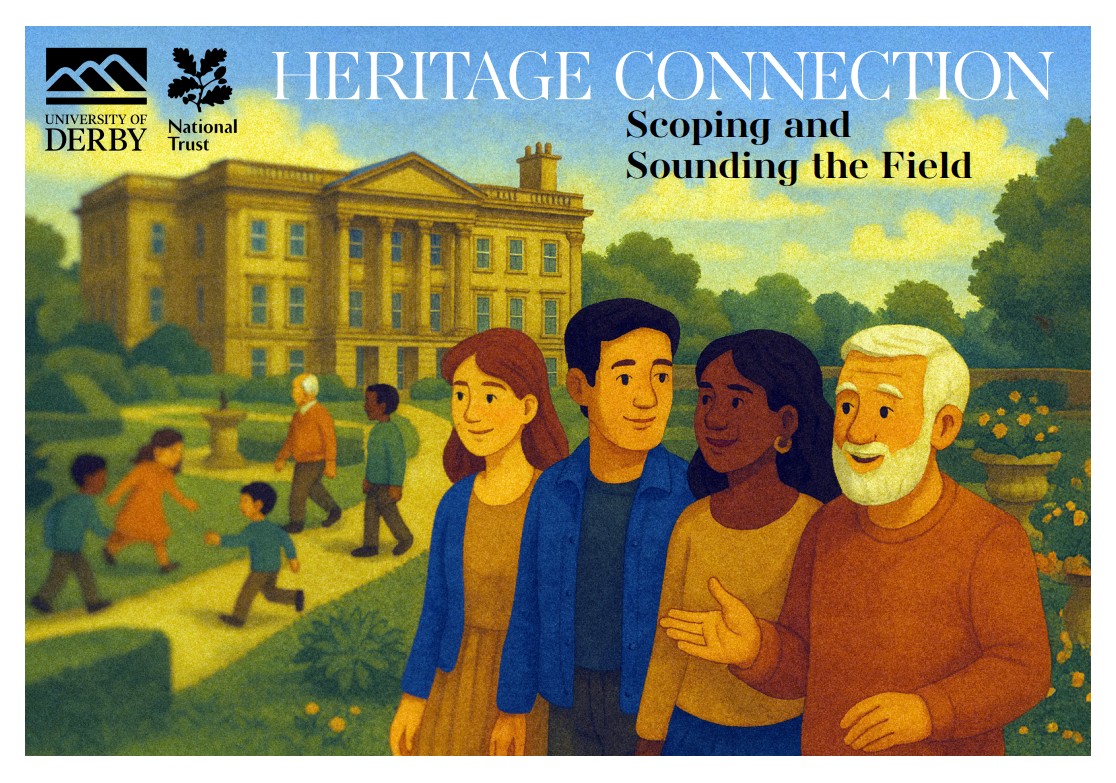
Previous research has identified a link between heritage and wellbeing – living near or visiting heritage sites or taking part in heritage activities have been found to boost mood and bring meaning and purpose to people’s lives. As well as supporting individual wellbeing, heritage can bring people together, offering community cohesion and a sense of place.
But the power of heritage to make us feel good doesn’t come from historic buildings or ancient artefacts or landscapes themselves. Simply being in or near something historic isn’t what boosts our sense of wellbeing. Much like nature connection, it’s people’s psychological experience of a place that matters – how we think and feel about heritage is more important than physical contact with it. This is where heritage connection comes in. It’s a way to understand and measure our subjective relationship with the places, people, and things of the past.
Through roundtables and workshops with heritage professionals, we explored what heritage connection looks and feels like. It’s about personal, meaningful and emotional engagement with heritage that helps people situate themselves in relation to time, place and other people. It offers a deep sense of belonging and a feeling of being a part of something bigger.
While work in this area is just beginning, we already know that heritage connectedness (as measured by a simple scale) can predict wellbeing and is associated with a sense of pride in place. Heritage connection offers exciting possibilities for understanding why heritage matters and how it can benefit both people and places.
We wanted to find out if some simple activities could help people feel more connected to heritage. So, we designed a heritage connection trail in the grounds and walled gardens of the National Trust’s Calke Abbey. Visitors were given an illustrated booklet with map and prompts at 15 ‘pause points’. Each prompt invited them to notice, imagine and reflect on the heritage around them, and encouraged sensory, emotional, imaginary, and personally meaningful engagement. Participants completed a survey before and after the trail. We found a significant boost to heritage connectedness, as well as enhanced nature connectedness and happiness.
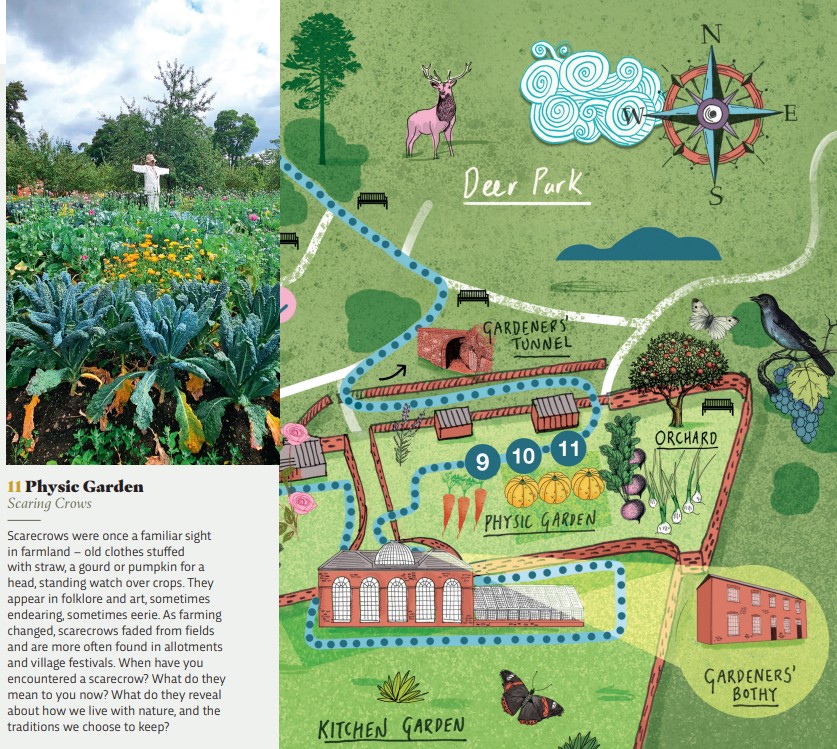
A heritage connection trail
In a focus group discussion, participants shared how personal and cultural backgrounds, like ancestry, class, ethnicity, nationality, and individual interests shaped opportunities to find connection with the heritage on the site. Important points were made about the hidden or unacknowledged heritage in many historic sites – which stories get told, and which ones don’t?
We are excited for the possibilities of this work. Our research agenda sets out ambitious next steps, developing understanding, frameworks and tools to strengthen heritage connection, embed it in policy and practice, and tackle barriers to inclusive engagement.
Relational approaches are essential for wellbeing and sustainability. We know about the importance of relationships with nature and other people – this work highlights the temporal dimension of connectedness. Heritage connection helps us see ourselves in relation to past people, places and events, creating a sense of continuity between past, present and future. That sense of connectedness offers meaning and purpose – linking us to bigger stories that shape who we are today and who we might become.
If you want to dive deeper, check out the report and share your reflections by commenting on this blog. We’d love to hear from you. What places or stories make you feel part of a bigger story?

 Finding Nature