Nature Connections 2018 Conference 20th June 2018.

The University of Derby’s annual Nature Connections conference will take place on 20 June 2018 and the draft programme is now available. Details and booking are available here: https://www.derby.ac.uk/enterprisecentre/events/nature-connections. It’s the fourth in the series and a popular forum for bringing together key research, policy and practice communities with a specific interest in connecting people and nature. The conference is being supported by Natural England’s Strategic Research Network.

Our themes for this year will be:

  • Connecting people with nature for wellbeing
  • Nature friendly education – encouraging children to be close to nature
  • Connecting people with nature in towns and cities
  • Connecting with the beauty of nature

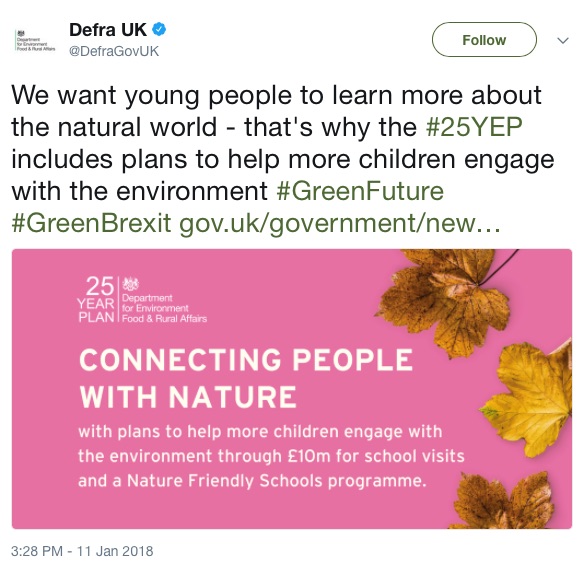
These themes have been specially chosen to align with the Government’s 25-Year Environment plan, in particular the actions highlighted in Chapter 3 on ‘Connecting people with the environment to improve health and wellbeing’. Our aim is to highlight the latest evidence and to identify the implications for research, policy and practice.

The themes of nature, well-being, connection and beauty are represented by this year’s keynote speakers. Cindy McPherson Frantz, Professor of Psychology and Environmental Studies at Oberlin College and Conservatory (USA), Gregor Henderson, National Lead, Wellbeing and Mental Health at Public Health England and Howard Davies, Chief Executive of the National Association for Areas of Outstanding Natural Beauty (AONBs).

Prof. McPherson Frantz’s research focuses on humans’ relationship with the natural world, with an emphasis on promoting sustainable behaviour. Research in collaboration with Steve Mayer suggests that both individuals and the environment benefit when people feel connected to the natural world. This work includes key papers on measuring nature connectedness, the role of nature connectedness in well-being and environmental education. Widely cited publications include:

  • Mayer, F. S., & Frantz, C. M. (2004). The connectedness to nature scale: A measure of individuals’ feeling in community with nature. Journal of environmental psychology24(4), 503-515.
  • Frantz, C. M., & Mayer, F. S. (2014). The importance of connection to nature in assessing environmental education programs. Studies in Educational Evaluation41, 85-89.
  • Mayer, F. S., Frantz, C. M., Bruehlman-Senecal, E., & Dolliver, K. (2009). Why is nature beneficial? The role of connectedness to nature. Environment and behavior41(5), 607-643.
  • Frantz, C., Mayer, F. S., Norton, C., & Rock, M. (2005). There is no “I” in nature: The influence of self-awareness on connectedness to nature. Journal of environmental psychology25(4), 427-436.

Gregor Henderson is a former adviser to the Department of Health and has led public mental health programmes such as the internationally renowned National Programme for Improving Mental Health and Wellbeing. Gregor believes in combining policy, research, practice and people’s lived experiences to help transform the way people and communities think and act about mental health and wellbeing.

Howard Davies is passionate about the natural environment and the relationship between people and place. He started his career in farming, before moving into research and development. Subsequent work has focused on practical conservation organisations and before he took up his current role he was Director of Wildlife Trusts Wales.

Nature Connections 2018 will demonstrate how our health and well-being is linked to a connection with nature and its beauty. And of course, both diversity of wildlife and a healthy environment are key to nature’s beauty.


Posted in Uncategorized | 2 Comments

A Guide to Nature

Nature is in decline and there is a need to promote a new relationship with the natural world. A closer relationship based on an emotional attachment where nature has meaning in our lives. Where we sense and appreciate nature’s everyday beauty. Where we develop a compassion for nature.

In Spring last year I was in a nature-based visitor center and was struck by the shelves full of guides to identifying nature. This promotes a certain type of relationship with the natural world. Yet, we know such knowledge of nature isn’t a pathway to connection and is a poor predictor of the pro-nature behaviours we desperately need. However knowledge based relationships with nature are the dominant relationships we promote. When designing a nature engagement experience (especially for children), many will ask about the learning outcomes. Why not learn to develop a closer bond with nature?

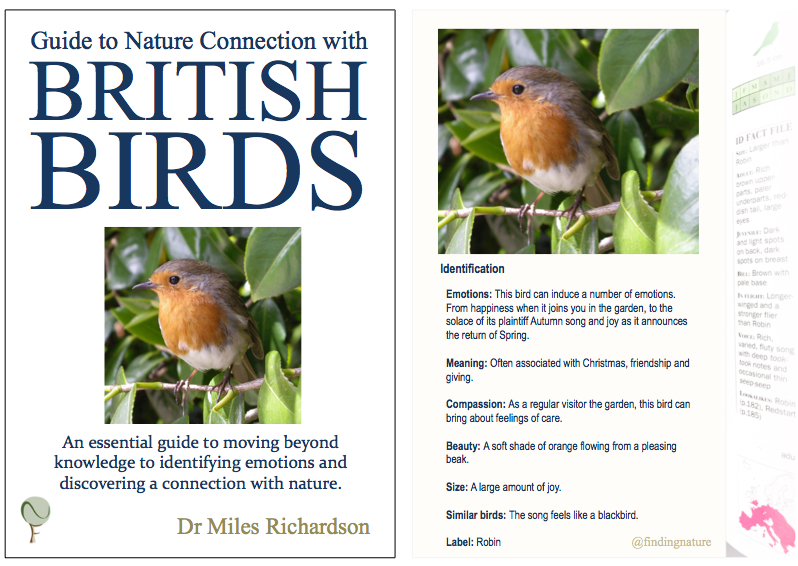
Nature connectedness describes an emotional relationship with nature, where we understand that we are part of nature – doing harm to nature is ultimately harming ourselves. Unsurprising then that activities in nature that promote emotions help develop a connection with nature. So, stood looking at the bookshelves I imagined a very different guide, an alternative book to choose. One that challenges our thinking – that flips engagement with nature on its head. Rather than asking what that bird is, ask how it makes you feel.

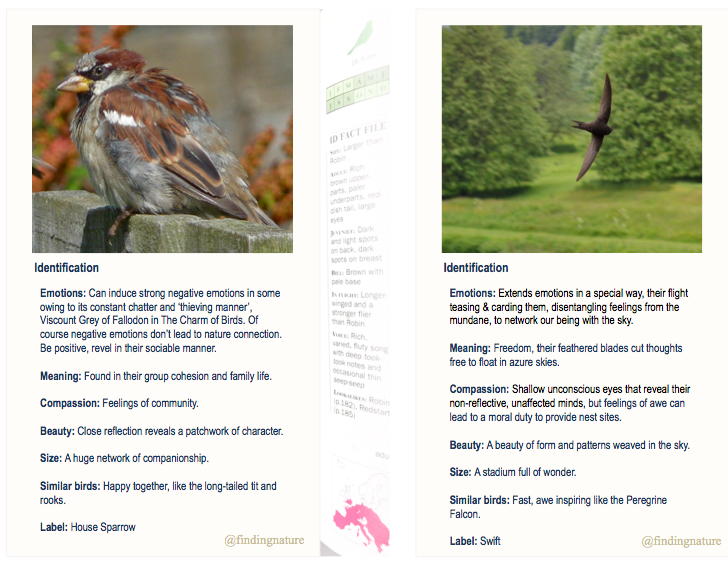
So, here is that idea brought to life, a thought experiment that might actually work in practice. It could be carefully crafted, a literary experience, compiled from the emotions expressed by nature writers – or from more contemporary submissions. In my example, I’ve used the pathways to nature connection as headers and played with headings typically found in bird guides.

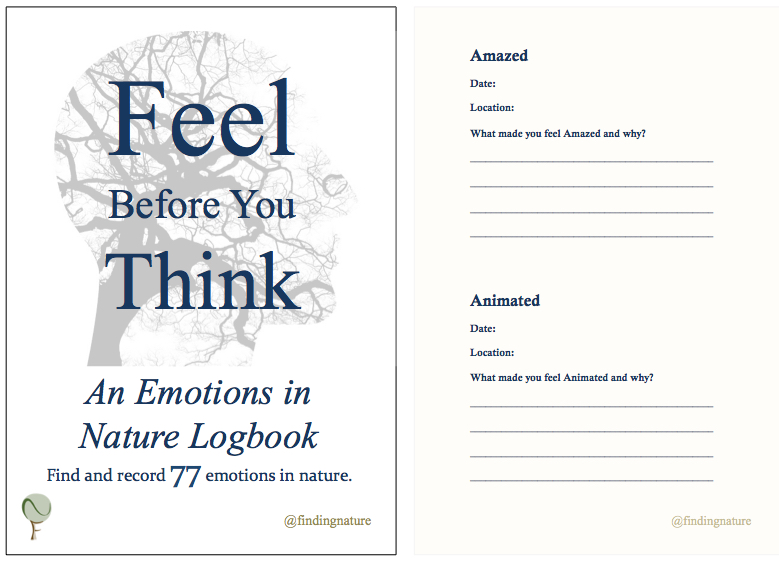
Taking the idea a little further, and building on the simple pleasure of a tick list, I’ve mocked-up an ‘Emotions in Nature Logbook’. The brain feels before it thinks, so this idea provides a prompt to retreat from knowing and identifying nature to spend time simply finding joy and calm within it.

Maintaining the feeling of wonder in nature is important. One of my favourite quotes is:

“It took me four years to paint like Raphael, but a lifetime to paint like a child.”

Pablo Picasso

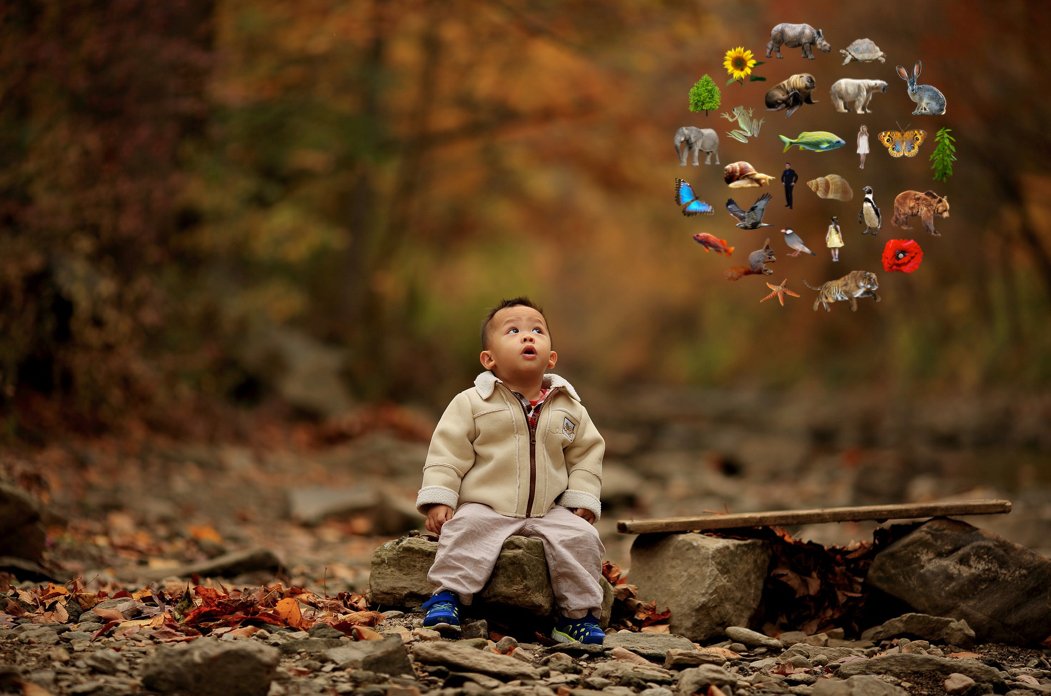
What we have as children, we lose in adulthood. Children naturally find wonder in nature, yet we know a connection to nature drops rapidly during teenage years – a time of change, new social pressures and learning outcomes. So let’s try and retain and foster that wonder, through adolescence and into adulthood – because nature matters.


Posted in Uncategorized | 8 Comments

Nature Connection and the 25 Year Environment Plan

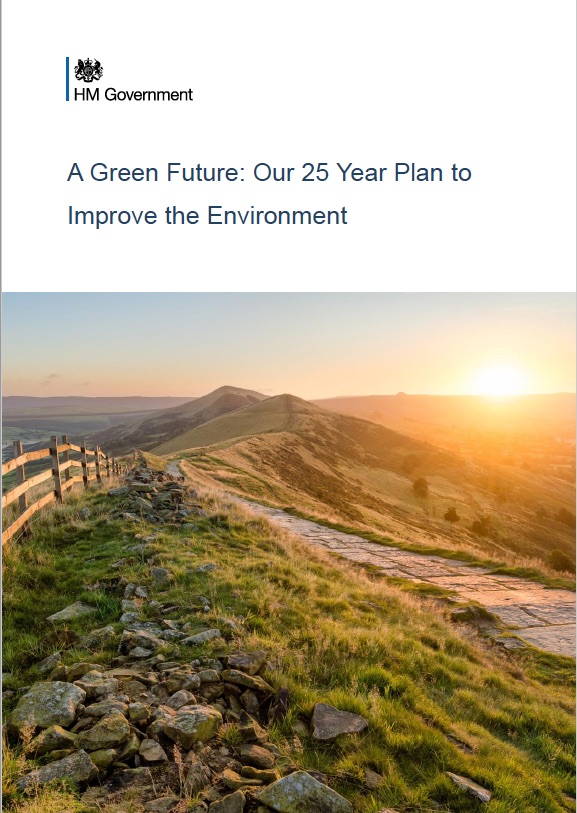
The publication of the Government’s 25 Year Environment Plan includes policies related to connecting people with nature for wellbeing, urban nature and nature’s beauty – all themes of our nature connections research at the University of Derby. In the foreword Michael Gove notes that the environment is another word for nature, the planet that sustains us, that inspires wonder and places of beauty. The Secretary of State has returned to these themes of emotion and beauty and regularly (last week and in July) and research shows that there are links between them and the often hidden benefits of nature recognised in the plan. This blog considers the policies related to connecting people with nature, urban nature and nature’s beauty.

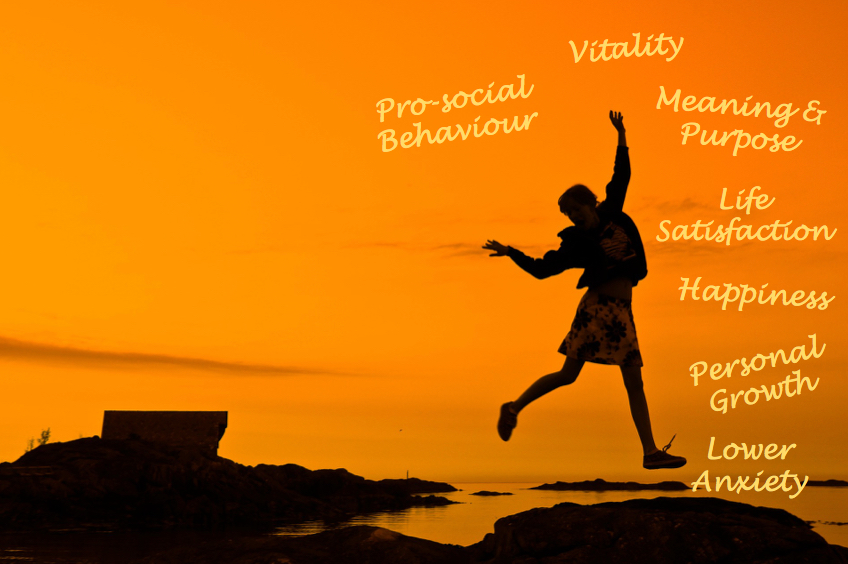
Connecting people with nature to improve health and wellbeing is one of six key policy areas. The wide-ranging benefits of nature are stated – reducing stress, fatigue, anxiety and depression. Boosting immune systems, physical activity and pro-social behaviours. The first part of the policy aims to increase time spent in and engagement with nature. Exposure to nature is good for us, but a connection with nature brings it’s own benefits and our research shows the ways to engage with nature to develop this connectedness – and they include those themes of emotion and beauty in nature. You can read more on our pathways to nature connection here – handy as the policy sets out to connect people systematically with nature. These informed our work with The Wildlife Trusts on their 30 Days Wild campaign – our evaluation work over 3 years has shown how tens of thousand of people taking part have become more connected to nature, happier and healthier.

To promote health and wellbeing the 25 year plan includes the launch of a ‘Natural Environment for Health and Wellbeing’ programme that will promote the natural environment as a pathway to wellbeing. The programme will develop tools to reach as many people as possible, with green and social prescriptions. Our work package within the Improving Nature through Urban Wellbeing (IWUN) project includes a smartphone app that will inform approaches to green prescriptions.

The second part of the connecting people with nature policy is focussed on encouraging children to be close to nature, particularly where a child has no access to a garden. The Nature Friendly Schools Programme will help create school grounds that support learning about the natural world and also keep children happy and healthy. Research evidence suggests that knowledge of nature isn’t a pathway to nature connection, so it is important that around the learning there is time to simply sense and make contact with nature, to enjoy its beauty, find meanings and emotions in nature – the themes of nature connection Michael Gove returns to in his speeches, but don’t appear in the policy outlined so far.

The third part of the connecting people with nature policy is about greening towns and cities. The focus here is on increasing and improving green infrastructure. This will include updating standards for green infrastructure and helping local authorities evaluate green spaces against these standards. Through identifying the types of green space that best promote wellbeing, the results of the on-going IWUN project will provide evidence that can inform such standards and our smartphone app Shmapped provides the technology.

Finally, a return to nature’s beauty and a second key policy area – enhancing the beauty of landscapes. It’s great that the inherent beauty of nature is central to the plan and linked to protecting and recovering nature from the losses over the past 50 years. There is a commitment to review Areas of Natural Beauty and the emerging science of the links between nature’s beauty, emotion and wellbeing can add to such reviews through understanding and making plain the links between beauty and the positive impact on the physiology of our bodies when it is experienced. The wellbeing benefits of nature are more significant for those people attuned and engaged with nature’s beauty.

This supports the need to go beyond activities that simply take people into nature, for any purpose, or just for learning. The purpose and activities matter if people are to be engaged with and connected to the natural environment. Now that the health and wellbeing benefits of nature are accepted by Government, there is a need to better understand the science of our connection with nature – after all there’s a disconnection at the root of the declining state of nature.


Posted in Uncategorized | Leave a comment

Nature Knowledge or Nature Connection: Which accounts best for Pro-Environmental Behaviours?

A fundamental component of environmental education, and a traditional aspect of nature engagement is environmental knowledge. Knowledge of nature is seen as being indispensable to the promotion of sustainable behaviour – surely to know is to care?

A recent research paper studied children’s environmental education and the resulting environmental knowledge and nature connectedness. Research shows that the link between environmental knowledge and behaviour is weak, hence the work of Otto & Pensini aimed to include the role of nature connectedness. Moving beyond knowledge to connection has been a theme of several of my blog posts (here and here for example) and our recent research shows that knowledge is not a route to nature connection. There’s also a poor relationship between nature knowledge and nature connection.

Connectedness is nature better understood.

Nature connection provides the all-important intrinsic motivation for adopting a more ecological lifestyle – when connected, harming nature is harming one’s self! Otto & Pensini note that a connection with nature is perhaps the strongest predictor of ecological behaviour – as a single construct it has been found to out perform all other variables. Yet they note that fostering nature connectedness is not a common feature of environmental education.

In the research, data from 255 children aged 9-11 was gathered. Measures were participation in environmental education, ecological behaviour, environmental knowledge and nature connectedness. The statistical analysis revealed two stark figures.

Despite careful checks on the measure, environmental knowledge explained only 2% of the variance in ecological behaviour. Nature connectedness explained 69%. It was also found that nature-based environmental education increased knowledge by fostering nature connectedness and in this instance the education had a similar effect on both knowledge and connectedness, but clearly nature connection brought the greatest rewards in terms of ecological behaviours.

The research provides strong evidence that environmental education should be nature based, bringing nature knowledge through a focus on nature connection in order to bring pro-nature behaviours. In sum, our focus needs to shift from knowledge to connection. However, the most common challenge I receive when delivering sessions on connecting with nature through developing an affective relationship is that developing knowledge is the key. Our knowledge-based relationship with nature is deeply embedded – we like to identify, name and classify nature in order to understand.

Scientific knowledge is important, (I’m a scientist), but the evidence shows that connectedness and emotional relationship with nature matter. Efforts to engage people with nature are often based on knowledge and identification – we’re driven to know, to understand, be smarter, to walk further, to run faster, to climb, to cross, to conquer – and to consume. Whereas connecting with nature can start with less purposeful activities, simply sensing nature, noticing its beauty and the emotions evoked. These can develop into deeper explorations of the meaning we find in nature as we develop compassion for nature. Science is about understanding nature, but connection is nature better understood.


Otto, S., & Pensini, P. (2017). Nature-based environmental education of children: Environmental knowledge and connectedness to nature, together, are related to ecological behaviour. Global Environmental Change, 47, 88-94.


Posted in Uncategorized | 7 Comments

Trees, wood, roses and mood across the seasons: Time for a Nature Connection Research Round-up

There have been several interesting research papers published recently, this blog takes a brief look at six of them. We start with trees and children’s play, briefly consider “Millennials” before moving on to the physiological responses to trees and roses, and our emotional regulation. A theme which continues across the seasons and ends considering time itself.

Soon after my previous blog on affordances and sense of place, a second paper on affordances was published. Laaksoharju’s paper explores urban children’s relationship with trees and how their connectedness to place evolves. The study showed how the use of trees becomes more varied over time, the trees offering multiple and intriguing opportunities for play (e.g. climbing and den building) that met the children’s social and private needs. The recommendations are straightforward, for natural spaces with trees that are available to connect with – only then can affordances and meaningful relationships with nature emerge. Trees can be the main attraction in playgrounds and should be considered during the planning and positioning of children’s playgrounds and green spaces more generally – the more diverse the vegetation the more diverse the affordances and experiences for the children. A tree is not a tree, rather a pathway towards nature connection.

A fallen tree affords play

A lack of tree access and nature connectedness is a possible factor at the root of the issues highlighted in another paper on “Millennials”. The paper by Metz states that this generational group born between 1982 and 2001 spend decreased time outdoors alongside more time using technology, and demonstrate higher levels of narcissism and lower levels of empathy which may impact the overall functioning of these individuals. I’ve considered such research before and clearly there are a wide variety of relationships with nature that exist within that generation, however Metz uses the snapshot to highlight the importance of bringing nature, and nature connectedness, into everyone’s lives – it is important for children and adults, both younger and older. We all share a capacity to develop a meaningful connection with nature and a physiology that benefits from contact with nature.

Simply Viewing Roses Calms

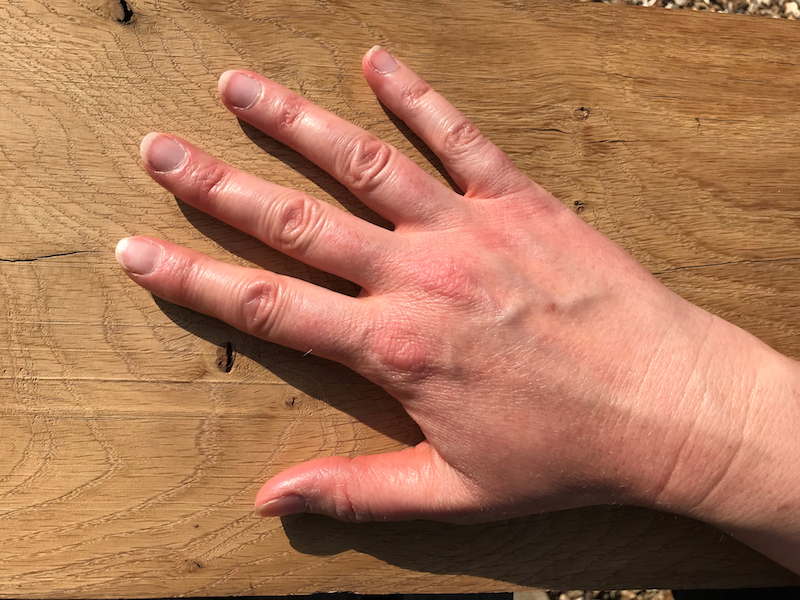
Returning to trees, my July 17 blog post on forest bathing showed how spending time with trees impacts our health within the context of a ‘3 Circles’ model of the operation of our nervous system and resulting emotional regulation. A new paper by Ikei and colleagues was published over the summer which demonstrated that the same physiological responses can be gained from simply touching wood. In the study, people placed their palm on un-treated white oak, marble, tile and stainless steel with their eyes closed for 90 seconds. As with forest bathing, touching the wood led to greater parasympathetic nervous activity, indicating physiological relaxation. A further paper involving the same researchers’ shows similar physiological responses can also come from simply viewing an image of roses for 3 minutes. This time a reduction sympathetic nervous activity. The response to forest bathing, touching wood and viewing roses can all be explained using the 3 Circles model, which also helps us understand how and why nature is beneficial – you can more about the 3 Circles model in my July blog.

3 Circles Model of emotion regulation

Next, we move on to the link between emotional regulation and mood and a paper just published by Brooks and colleagues on nature-related mood effects and the seasons. This paper shows that the emotional benefits of nature are present still present in the winter, and that although both are beneficial, as indicated by the rose’s study, actual nature is more effective than pictures of nature. The research compared walks inside and outside in winter, photos of urban and nature scenes in winter, and actual and pictorial nature contact. Measures of positive affect, stress, depression and anxiety, clinically relevant emotions, were taken. The results showed that brief 10 minute exposure to nature benefits mood, and that this doesn’t need to involve exercise.

Children by a Winter’s Tree

Finally, a brief mention of a paper by Davydenko et al who considered the impact of nature on the perception of time. Through asking people to estimate the duration of a walk, they found that experiences in nature can feel longer than the same experience in a man-made environment. As above, the nature walk also led to an improvement in mood when compared to the urban walk.

I’ve written before that nature connection isn’t about turning back time to halcyon days – it’s about the here and now, slowing down time, taking a moment to view the roses, touch and be with the trees, be it winter, summer or fall. This can be active, or reflective, children at play or adults at rest. The case is simple, spending time with nature feels good, feels longer, means more and impacts on our physiology, balancing our emotions, holding our heart steady.


Laaksoharju, T., & Rappe, E. (2017). Trees as affordances for connectedness to place–a model to facilitate children’s relationship with nature. Urban Forestry & Urban Greening.

Metz, A. L. Back to Nature: The Relationship Between Nature Relatedness on Empathy and Narcissism in the Millennial Generation.

Ikei, H., Song, C., & Miyazaki, Y. (2017). Physiological effects of touching wood. International journal of environmental research and public health14(7), 801.

Song, C., Igarashi, M., Ikei, H., & Miyazaki, Y. (2017). Physiological effects of viewing fresh red roses. Complementary Therapies in Medicine.

Brooks, A. M., Ottley, K. M., Arbuthnott, K. D., & Sevigny, P. (2017). Nature-related mood effects: Season and type of nature contact. Journal of Environmental Psychology.

Davydenko, M., & Peetz, J. (2017). Time grows on trees: The effect of nature settings on time perception. Journal of Environmental Psychology54, 20-26.


Posted in Uncategorized | Leave a comment