
Sapiens: A Brief History of Humankind by Yuval Noah Harari provides deep context for understanding our connection to nature. It tells the story of our journey from a deep embeddedness in the reality of nature to a possible future as a new, engineered human species.
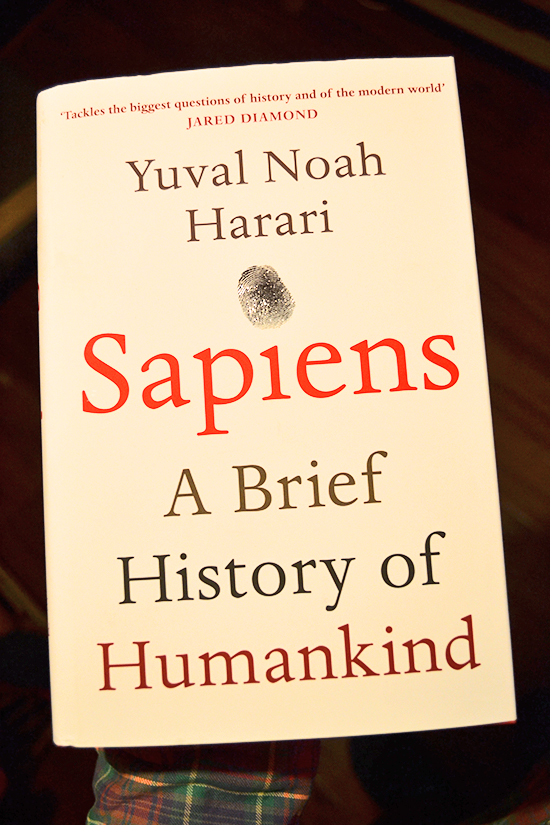
I was keen to read the first two parts of the book, the cognitive and agricultural revolutions – the journey from an animal of no significance to the ‘fraud’ of an agricultural lifestyle. For two million years humans were marginal and weak creatures, living in constant fear of predators, where strong social ties were important to raise underdeveloped infants. Then came a cognitive revolution that saw a spectacular leap 100,000 years ago to the top of the food chain, outpacing the checks and balances of the ecosystem. Harari compares majestic predators such as lions, with a self-confidence derived from millions of years of dominion and evolution, to sapiens, underdogs full of anxiety and fear over maintaining our position – a situation at the root of many ecological catastrophes and historical calamities.

 Finding Nature