A Brief History of our Connection to Nature

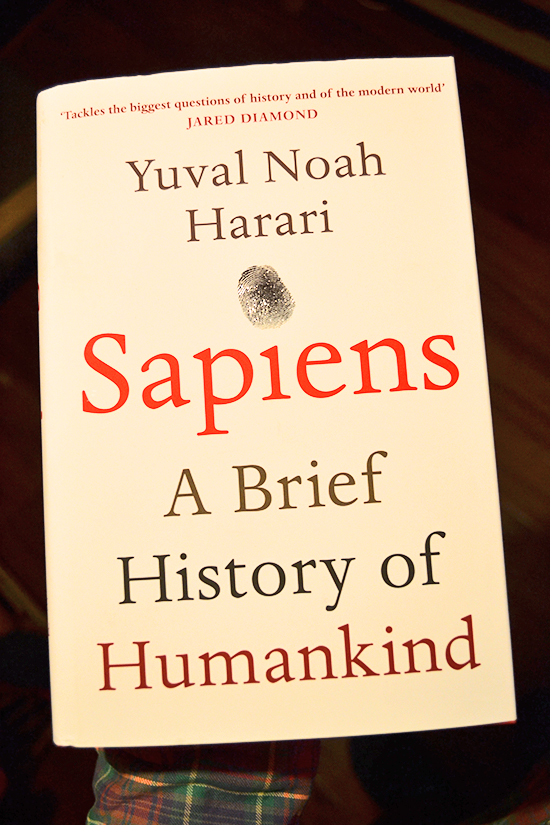
Sapiens: A Brief History of Humankind by Yuval Noah Harari provides deep context for understanding our connection to nature. It tells the story of our journey from a deep embeddedness in the reality of nature to a possible future as a new, engineered human species.

DSC_7943

I was keen to read the first two parts of the book, the cognitive and agricultural revolutions – the journey from an animal of no significance to the ‘fraud’ of an agricultural lifestyle. For two million years humans were marginal and weak creatures, living in constant fear of predators, where strong social ties were important to raise underdeveloped infants. Then came a cognitive revolution that saw a spectacular leap 100,000 years ago to the top of the food chain, outpacing the checks and balances of the ecosystem. Harari compares majestic predators such as lions, with a self-confidence derived from millions of years of dominion and evolution, to sapiens, underdogs full of anxiety and fear over maintaining our position – a situation at the root of many ecological catastrophes and historical calamities.

Continue reading

Posted in Uncategorized | Leave a comment

Nature Gives Us Strength

A blog update has been overdue, I’ve been busy writing papers and preparing for Nature Connections 2015, amongst other things – so a few research papers to catch-up on.

Firstly, a meta-analysis by McMahan and Estes on the effect of contact with nature on positive emotions. A meta-analysis is important as it brings together results from multiple studies, 32 in this case, with 2356 people. Across all these studies exposure to nature was associated with increases in positive emotion, or affect. This was combined with a smaller decrease in negative emotion.

The studies combined within this analysis used real and laboratory based exposure to nature, which itself was either wild or managed. Importantly, exposure to real nature had a larger effect than laboratory simulations – a technological, virtual reality solution to nature’s decline is not the way I’d want to go! Interestingly, the type of nature did not matter – managed, urban natural spaces were as good as wilderness areas. Finally, the impact of nature was greater as the samples of people became older.

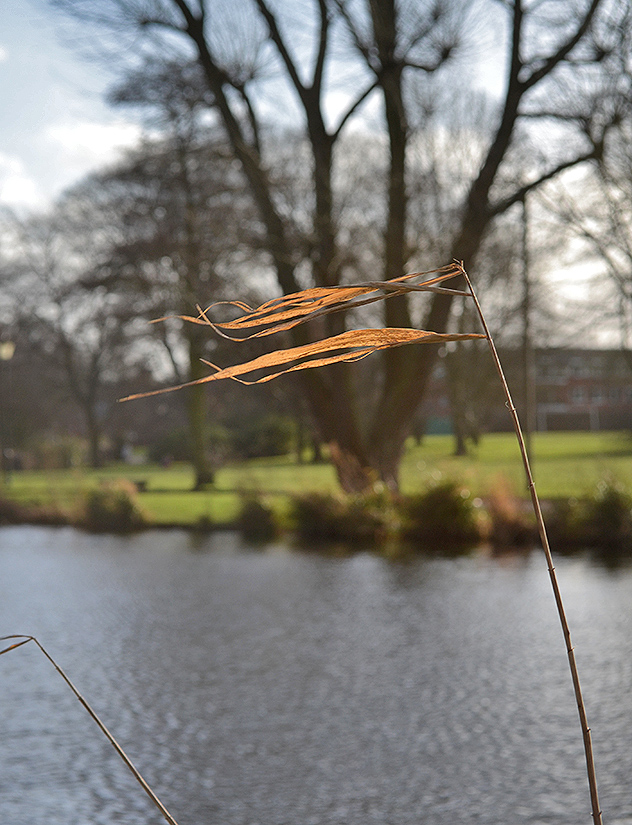
DSC_9388

Finding nature in an urban park.

Continue reading

Posted in Uncategorized | Leave a comment

Nature Connections 2015

Nature Connections 2015, an interdisciplinary conference to examine routes to nature connectedness, is about 10 weeks away and we can now reveal the draft sessions and speakers, see below.

Owing to the state of nature and the benefits to human wellbeing there is a growing interest in our connection to nature. As these benefits become more apparent the timing is right for a focused event to bring together practitioners, researchers and beyond to consider routes to nature connection. Come and join us for Nature Connections 2015, booking open.

NC2015 – draft sessions and speakers.

Continue reading

Posted in Uncategorized | Leave a comment

Searching for New Year

As it’s New Year’s Day this post is simply the opening of Chapter 1, ‘Searching for New Year’, from A Blackbird’s Year: Mind in Nature. This excerpt starts to explain how my creative writing about nature underpins my research into connection to nature. Illustrations by Danielle Callaghan

Searching for New Year

chapter 1

1st January to 29th January

Continue reading

Posted in Uncategorized | Leave a comment

A Year of Nature

As is typical, an end of year summary post. Being a scientific type it’s stats driven, in contrast to my personal highlight, thinking about nature’s beauty – I’ll cover that, and the most popular posts at the end of the post. First up are some popular tweets, which are also worth reflecting on.

Continue reading

Posted in Uncategorized | Leave a comment