Policy for a New Relationship with Nature

Our relationship with nature is failing. Staggering declines in biodiversity, together with climate change show the negative impact of human behaviour over generations. Globally, institutions are recognising the need to fix the human-nature relationship. Here in the UK, we’ve got further to go than most nations. The UK is one of the most nature depleted countries on Earth and a population with low levels of nature connection.

Our new policy briefing introduces the concept of nature connectedness as a catalyst for change, and how fostering a deeper relationship with nature that goes beyond simply spending time outdoors. It then offers ideas that can help foster nature connection at societal scale. You can access your own copy of the briefing here.

Nature Connectedness helps unite both human and nature’s wellbeing. Research shows that individuals with a stronger connection to nature are more likely to engage in pro-environmental behaviours and connecting with nature promotes greater well-being. Nature connection should be a pillar of a sustainable future.

Nature connectedness benefits both people and nature

This briefing proposes integrating nature connectedness into various policy areas, creating a virtuous cycle where increased connection leads to environmental protection, ultimately fostering stronger connections. The policy suggestions in the briefing centre around:

  • Reframing Health and Wellbeing
  • Building Nature Connected Communities
  • Cultivating Nature Connection in Education
  • Protecting and Restoring the Environment
  • Enable Nature Connected Travel
  • Celebrate the Human-Nature Relationship

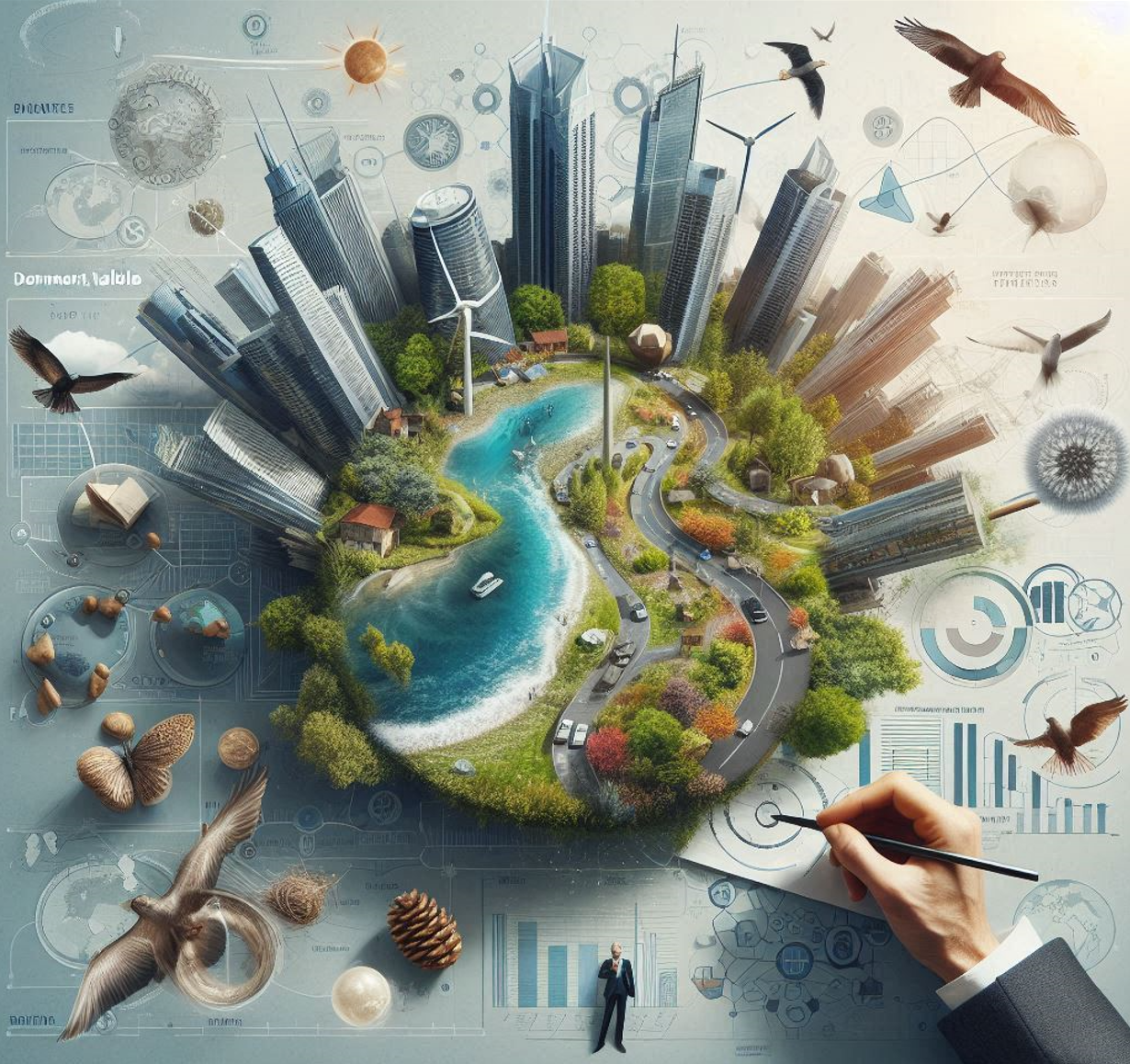
Possible types of relationships with nature and their outcomes

The concept is simple, shifting from our existing exploitative relationship with nature, to a new relationship. By shifting our focus towards fostering nature connectedness, we can create a future where human and environmental well-being are intertwined. Implementing these policy recommendations across various sectors can initiate a positive and sustainable transformation in our relationship with the natural world. Download the briefing to learn more about the concept of nature connectedness and explore ways to integrate it into your daily life. Together, we can create a future where people and nature thrive in harmony.


Posted in Uncategorized | Leave a comment

Counting butterflies for calm, connection, and conservation

A guest blog by Dr Carly Butler, Researcher in Nature Connectedness, University of Derby.

Everyday noticing and appreciation of the more-than-human world is vital for developing a sense of nature connectedness. Yet, a 2020 study by University of Derby and the National Trust found that in the United Kingdom, people often don’t pay attention to nature, with nearly two-thirds of people reporting that they rarely or never listen to bird song or watch butterflies. These findings reflect (and may partially explain) the low levels of nature connectedness in the UK. They are worrying as these simple ways of engaging with nature are so important in the growth of closer relationships with nature, which in turn are vital for the wellbeing of both people and planet. People with a stronger sense of nature connectedness are more likely to feel happy, satisfied with life, and to take action to help nature. A culture in which people don’t notice butterflies is not well-resourced to deal with the meta-crisis.  As discussed in a previous blog post on the ‘butterfly affect’, small acts of noticing can potentially have big impacts.

Past research from the Nature Connectedness Research Group has found that taking part in citizen-science activities, like counting pollinators or birds, leads to increased nature connectedness and wellbeing. The impact of taking part was boosted by experimental manipulations of people’s noticing and appreciation of nature – by noticing three good things in nature, or rating birds for feelings of joy they invoked. These studies demonstrated the value of citizen science activities extend beyond the contributions to conservation – they can benefit humans themselves and improve the human-nature relationship.

Our latest paper, just published in Biological Conservation, reports on a collaboration with Butterfly Conservation that looked at the impact of a real-world citizen science project. The annual Big Butterfly Count is one of the world’s largest nature-based citizen science projects, in which more than 60,000 people spend fifteen minutes on a sunny day to count and record how many butterfly species they see during that time. In 2022, people who signed up for the Big Butterfly Count were also invited to take part in our research. Those who took part completed a survey before and after the Big Butterfly Count period (N=382), and then again at follow-up a few weeks later (N=345), which explored whether the simple act of watching and counting butterflies had an effect on nature connectedness, wellbeing and people’s tendency to notice nature and butterflies.

We found that after taking part in the Big Butterfly Count, nature connectedness was increased, people were more likely to notice butterflies and other nature, and anxiety was decreased by nearly ten percent. At follow-up we found increased wellbeing and butterfly noticing. The impact of taking part was greater when people experienced stronger emotions during the count – the more joy, compassion, interest, and fascination they felt, the greater the increase in nature connectedness and noticing.

Participants were also invited to comment on their experience of taking part in the count. Many reported feelings of joy, wonder, and calm and shared the pleasure they received from watching the butterflies in a focused and sustained way. There were also many reports of feelings of sadness and concern, particularly when seeing few butterflies to count, and comparing their count to previous years. However, these feelings often motivated ongoing and renewed actions for nature – commitment to continue taking part in the count, and planting for pollinators.

The research shows that a real-world citizen science project designed primarily to gather scientific data and raise awareness of butterfly conservation can also improve people’s wellbeing and relationship with nature. Beyond that, it reminds us that counting butterflies is not just a matter of counting butterflies – it is an emotional engagement with the more-than-human world, an opportunity for close focused attention toward nature, and an invitation to tune into the beauty and wonder of these magnificent flying creatures. Such moments with nature renew our relationships with the wider living world, helping us feel closer to and more a part of nature. These reminders of our connections with, and appreciation for, the more-than-human have never been more necessary.

The time we spend helping nature by contributing to the monitoring of its health and vitality, is time that also helps our own health and vitality. Conservation and regenerative activities are perhaps as important for humans as they are for nature, with the potential to encourage a cycle of noticing and connection and care. The wellbeing and nature connection benefits of citizen science deserve to be more widely recognised and developed through integrated nature and health initiatives – bringing wildlife monitoring into green social prescribing for example, and championing the wellbeing benefits of counting wildlife. With Local Nature Recovery Strategies developing around the country, it’s important that communities are involved in supporting and monitoring that recovery. A system that values nature and people will support spaces where plants for pollinators can thrive, and where people can watch the pollinators so that they too can thrive, while helping to monitor the health of the more-than-human world.

Citizen science offers fantastic opportunities for people to contribute to scientific research, and to develop their knowledge and skills. Our research highlights the additional benefits of such projects – their invitations for communities to notice nature, to gift their attention to the more-than-human and to recognise, cherish, and deepen their emotional connection to nature. One butterfly at a time.


C.W. Butler, I. Hamlin, M. Richardson, M. Lowe, R. Fox (2024). Connection for conservation: The impact of counting butterflies on nature connectedness and wellbeing in citizen scientists,
Biological Conservation, 110497.


Posted in Uncategorized | Leave a comment

City lovers or Nature lovers?

A lot of research compares green spaces to urban spaces and the benefits of green over urban are widely recognised. However, might some people be better adapted to urban spaces? Do city lovers need a different nature prescription to nature lovers? These types of questions are explored in a recent research paper published in Landscape and Urban Planning.

Nature lovers thrive in green spaces. They are happier being around trees and birds. Whereas the city lover with lower nature connectedness might not get the same buzz from being in and around nature. Indeed, some might even feel stressed or anxious about spending time outdoors. An individual’s level of nature connectedness plays a role in the benefits gained from being in nature.

So, we can’t assume everyone benefits equally from green spaces. Like all design, when it comes to urban green spaces there’s a need to consider individual preferences and nature connectedness levels.

This new research involved a lab experiment where 68 people watched 10-minute videos of urban space and high or low biodiversity green spaces after completing demanding tasks. Measures of emotional response and eudemonic wellbeing were taken during the study. The findings are interesting, but this is a small single study based on watching short videos.

The study taps into something useful though, suggesting that green spaces act as an important ‘shelter’ for the highly nature connected, a place away from urban demands and helping restore emotional balance, the more biodiversity the better. The urban space had no benefit or made them feel a bit worse.

Whereas the low nature connection people seemed better adapted to the urban environment, which didn’t have a negative impact. They sensed less urgency to escape the urban environment, but they benefit more from the green space.

The more nature connected people were also more sensitive to the level of biodiversity and the difference between natural spaces and urban spaces. This accords with other research that shows that more nature connectedness people tend to look at nature more than artificial environments.

It should also be noted that study confirmed previous findings, generally nature is beneficial for all. Green space being more beneficial to wellbeing through calming emotions, whereas urban space tends to induce a prolonged state of arousal – but these effects vary by level of nature connection.


Gong, C., Yang, R., & Li, S. (2024). The role of urban green space in promoting health and well-being is related to nature connectedness and biodiversity: Evidence from a two-factor mixed-design experiment. Landscape and Urban Planning245, 105020.

Posted in Uncategorized | Leave a comment

The Language Stripes

A collaboration between Ochre Dawn, Ben Bowen (Indigenous Literacy Foundation), Araceli Camargo (Centric Lab), Professor Miles Richardson (University of Derby) and Dr Jake M. Robinson (Flinders University).

Languages can be a powerful tool to relate to and interconnect with the natural world1. Indigenous languages––those developed by First Nations Peoples––embody a deep ecological knowledge that is critical to protecting nature2. Biodiversity and Indigenous languages are undeniably intertwined3.

“Indigenous languages are the heart of the Earth… they embody the processes and teachings of the planet”1.

However, half of the world’s population speaks just 24 of the 7,000 or so languages, such that Indigenous Peoples, making up around 6% of the global population, speak more than 4,000 of the world’s languages1. The importance is such that the period between 2022 and 2032 has been proclaimed as the International Decade of Indigenous Languages by the United Nations General Assembly.

Languages developed over many millennia embody the values, symbols, meanings, and norms of the diverse cultures on Earth. Yet we’ve lost over 700 languages since 1700 largely due to colonialism and political repression, and the current rate of language extinction is 9 per year4. This is a shocking and under-reported phenomenon. But as startling as it is, by 2080, the loss of languages is expected to rise to 16 per year, further rising to 26 per year by 2150, at which point 50-90% of the 7,000 global languages will be extinct4–gone, and many with no means of recovery. Countless diverse cultural experiences poured into the development of human communication and knowledge over thousands of years, lost to history. To highlight this, we’ve created the Language Stripes.

The Language Stripes

The Language Stripes

“Language is the expression of our culture and our land. We cannot have one without the others. We cannot describe our culture and our land if we do not have language” – The Queensland Indigenous Languages Advisory Committee.

Cultural diversity is decreasing alongside biodiversity loss, and Indigenous languages are deeply tied to biodiversity, so this dual loss is often interrelated. Indigenous Peoples protect most of the global biodiversity, their ways of living are often in harmony with nature (even when they “manage” the land), and losing languages threatens cultures, which threatens biodiversity, which threatens languages. It’s a vicious cycle.

Therefore, protecting nature is vital to curb the loss of Indigenous languages and to protect Indigenous cultural identity and knowledge. Moreover, protecting Indigenous Peoples’ rights and sovereignty has the fundamental benefit of protecting nature’s voice.

“When Indigenous Communities lose their languages, kinship with nature is interrupted.”

Wiradjuri man and CEO of Indigenous Literacy Foundation Ben Bowen says,

First Nations languages indeed operate at a deeper level of knowledge compared to Western languages in certain aspects. These languages often carry millennia of cultural, ecological, and spiritual wisdom embedded in their vocabulary, grammar, and syntax. They are intimately connected to the land, environment, and traditions of Indigenous Peoples, reflecting profound insights about relationships with nature, social structures, and spirituality.

 Unlike many Western languages, First Nations languages often prioritise relationships when used. There are numerous words for kangaroo which gives an understanding of how one would interact with the animal due to the season, the land, behaviour and gender of the animal, to name a few. This has been shared and learned for millennia through scientific observation, learning of cultural practice and environmental stewardship.

 In essence, First Nations languages are repositories of Indigenous knowledge, offering unique perspectives that challenge Western worldviews and provide valuable insights into sustainable living, ecological stewardship, and cultural continuity. Efforts to preserve and revitalise these languages play a crucial role in safeguarding this deeper level of knowledge for future generations. These languages are truly irreplaceable treasures of human heritage.”

A coding tool.

Language is a coding tool that allows humans to absorb information about environmental phenomena for future use (memory)5. In time, we use these memories to create more advanced cognitive outputs such as stories, culture, and knowledge6,7,8. In this way, we can understand that language is embodied and rooted in the environments we inhabit9. Indigenous Peoples developed languages that are intrinsically entwined with the Land10. This allows them to be in deep and constant dialogue with all beings around them, which in turn provides them with knowledges that guide their ecological practices. However, it goes beyond developing a lexicon or vocabulary; the culture developed through Indigenous languages influences ecological relationships. For example, in the Raramuri language, Iwigara “expresses the belief that all life shares the same breath. We are all related to, and play a role in, the complexity of life11.” This type of thinking influences how some Indigenous Peoples relate to other-than-human beings, seeing them as Kin. It is this kinship that births a curiosity and responsibility to care for and contribute to the abundance of biodiversity.

The data and stripes

Here, we present the Language Stripes. We developed the stripes to bring awareness to the phenomenon of language extinction. You’ve probably heard of the IUCN Red List of Threatened Species, where animals and plants are given a category based on how ‘at risk’ they are of becoming extinct. Some species thrive and are considered ‘Least Concern’, others are ‘Endangered’, and others still are on the verge of becoming ‘Extinct’. You can think of languages in a similar way. Some languages, like English and Spanish, are ubiquitous, whereas others are doomed to extinction. Indeed, 46 languages have just one native speaker, while 357 languages have fewer than 50 speakers.

The Language Stripes follow the same logic as the Biodiversity and Climate Stripes. The data were acquired from a peer-reviewed study, showing historical average language loss from 1700 to the current day and future projections to 2080 and 21504. The tool developed by Simons (2019) was based on the Graded Intergenerational Disruption Scale (GIDS)12.

To create the 46 vertical stripes, conditional formatting of the language data allowed a data point each decade from 1700 to be assigned a colour. The highest number in 1700 was represented by blue, the lowest was represented by cream. A mid-point value in the data was represented by light blue. The declining trend in languages was therefore captured by a transition from blue to light blue and then from light blue to cream.

However, given the fact that the data is smooth, the colour changes would be too subtle for clear stripes to emerge. To capture the trend and produce stripes, each data point varies randomly between +/-3%. The creation of artificial variability is openly acknowledged as the stripes are intended to be a communication and public engagement tool on an underreported issue. The stripes engage people with the overall declining trend in languages over time.

We worked closely with the Australian Indigenous creative organisation Ochre Dawn to create the stripes (below). You’ll notice the stripes have a faint ‘yarning circle’ layer, designed by Indigenous artist Jordan Lovegrove. Yarning circles are prevalent in First Nations art. They represent a tradition of storytelling, knowledge sharing, and community bonding that is deeply rooted in Indigenous cultures––hence being highly relevant to this topic.

What the stripes represent

The impact of globalisation is a world dominated by a more Western mindset13. This impact on Indigenous Communities is one driver of language loss and represents human populations becoming less diverse as nature becomes less diverse. This matters intrinsically to Indigenous Peoples, but also to nature, as languages are critical in the protection of biodiversity and key to a deep relationship with nature. Indigenous Peoples also tend to have a different relationship with the natural world founded on a relational worldview––something we can all benefit from embracing.

Indigenous languages reflect this relational worldview, describing, for example, animals of the forest as co-dwellers, sentient beings able to feel and think, and perceiving nature to be integrated within their own self.11 Indigenous languages express concepts related to nature differently than, for instance, the English language does, with languages regulating the human-nature relationship14. Our language is limited and constrains solutions; for example, unlike some languages, we, who speak English as our primary language, don’t have a word for ‘living in harmony with the natural world’.15

Even within our English language, Indigenous Communities talk about nature differently. For example, when speaking of outdoor practices, Western families talk of sports, cycling and canoeing – activities that move through nature as a background. Whereas indigenous Communities talk of reciprocity, foraging, forest walks and medicinal plants.

Our preoccupations and tastes are reflected by our language. Even when we have words for nature, they are being used less and less. Our disconnection with nature is so profound that its separation seeps into our everyday language. Importantly, language not only reflects culture, but it also shapes it. The language of separation starts to frame our thinking, forming concepts of truth and reality. It has a profound influence on how we think and act, creating real boundaries to a close relationship with nature. Our perceived separation from nature is now so deep within our conceptual system, it is difficult to overcome.

The dualistic language of Western thinking promotes abstract reasoning about the natural world. For example, when people’s concepts of nature are studied, they can be placed into three themes: descriptive, normative and experiential.16 Descriptive language, such as describing plants and wildlife, dominates with 73% of responses. Normative language, often used by those with nature expertise, and Experiential language, which includes positive emotions, feelings and activities in nature, accounted for less than 6% of responses. People who describe nature in simple descriptive terms tend to have lower nature connectedness. Whereas more experiential terms are used by people with higher nature connectedness scores.

So, language drives the human-nature relationship. In the Anishinaabe culture of Central/Southern Canada, a strong positive relationship with nature grew from songs and stories.17 These oral traditions put nature in the foreground and together with close observations of nature, school children notice interrelationships. When oral traditions and languages are lost, the natural landscape falls mute.17 Essential knowledge, once passed from elders to children in the landscape through spoken language, is replaced by facts and figures delivered in the classroom. Further, when a language is lost, another must be adopted, and the conventions of that other language may separate the speaker from the rest of the natural world.

When Indigenous Communities lose their language, nature loses a voice, and when we lose nature, Indigenous peoples lose their cultural identity, rights and sovereignty. Therefore, we must prioritise language revitalisation efforts as a fundamental step towards preserving both the rich tapestry of Indigenous cultures and the ecological harmony they have maintained with the land for countless generations. These efforts require support and collaboration from broader society, including educational institutions, governments, and individuals. By actively working together to protect and revitalise languages, we can ensure that the voices of these Communities are heard, that their cultural identities are celebrated and respected and that the delicate balance between humanity and the natural world is maintained for the benefit of all.


Please support organisations such as the Indigenous Literacy Foundation, Language Conservancy, Living Tongues, and the Endangered Languages Project, which work tirelessly to protect Indigenous languages.


References

  1. Redvers, N., Menzel, K., Ricker, A., & Lopez-Carmen, V. A. (2023). Expanding the scope of planetary health education: the International Decade of Indigenous Languages. The Lancet Planetary health, 7(1), e4-e5.
  2. UNESCO, C. (2017). Biodiversity and linguistic diversity. UNESCO.
  3. Gorenflo, L. J., Romaine, S., Mittermeier, R. A., & Walker-Painemilla, K. (2012). Co-occurrence of linguistic and biological diversity in biodiversity hotspots and high biodiversity wilderness areas. Proceedings of the National Academy of Sciences, 109(21), 8032-8037.
  4. G. (2019). Two centuries of spreading language loss. Proc. Ling Soc Amer. 4. 27:1-12.
  5. Gabrieli, J.D. (1998). Cognitive neuroscience of human memory. Annual review of psychology, 49(1), pp.87-115.
  6. DiMaggio, P. (1997). Culture and cognition. Annual review of sociology, 23(1), pp.263-287.
  7. Lupyan, G., Rahman, R.A., Boroditsky, L. and Clark, A. (2020). Effects of language on visual perception. Trends in cognitive sciences, 24(11), pp.930-944.
  8. Gabrieli, J.D. (1998). Cognitive neuroscience of human memory. Annual review of psychology, 49(1), pp.87-115.
  9. Perlovsky, L. (2009). Language and cognition. Neural Networks, 22(3), pp.247-257.
  10. Martinez, D. (1994). Traditional environmental knowledge connects land and culture: American Indians serve as the link. Winds of Change 9:(4)89–94.
  11. Salmón, E. (2000). Kincentric ecology: Indigenous perceptions of the human–nature relationship. Ecological applications, 10(5), pp.1327-1332.
  12. Fishman, J.A. (1991). Reversing language shift. Clevedon, UK: Multilingual Matters Ltd.
  13. Sabloff, A., & Lemon, J. (2001). Reordering the natural world: humans & animals in the city. Urban History Review, 30(1), 71.
  14. Angle, S. C. (2009). Sagehood: The Contemporary Significance of Neo-Confucian Philosophy. New York: Oxford University Press.
  15. Bang, M., Marin, A., Medin, D., & Washinawatok, K. (2015). Learning by observing, pitching in, and being in relations in the natural world. In Advances in Child Development and Behavior, 49, 303–13.
  16. Lakoff, G., & Johnson, M. (2008). Metaphors We Live By. Chicago: University of Chicago Press.
  17. Hatty, M. A., Goodwin, D., Smith, L. D. G., & Mavondo, F. (2022). Speaking of nature: relationships between how people think about, connect with, and act to protect nature. Ecology and Society.
Posted in Uncategorized | 1 Comment

From Metrics to Mindsets: How We Can Ensure a Love for the Natural World

Last week the Government pledged to ‘boost Britain’s access to nature’ and ‘connect the public with the natural world’. This commitment includes funding to encourage more children to spend time outdoors and the establishment of a new National Park. The ability of the area to connect people with nature is a key criterion for this park.

Prime Minister Rishi Sunak said “We must do all it takes to protect these much-loved spaces and ensure that love for the natural world continues into the next generations.” While the use of the word “love” suggests a deep emotional connection, the press release uses the word “access” 22 times, giving the announcement a functional tone. Unfortunately, the sad truth is that the UK is not a nation of nature lovers. In fact, it ranks at the bottom among European countries, reflecting a strained relationship with nature. The UK is one of the most depleted nations in terms of nature.

A nation of nature lovers?

Too often and for too long, nature has been viewed as a resource to exploit, sometimes a threat and at best a source of recreational challenges. That is not a loving relationship. Nor is love built on access alone. We have previously explored the parallels between interpersonal and human-nature relationships. While access is undoubtedly an important first step, it is akin to opening the door to a party. However, walking into a room full of strangers can be challenging, especially if you don’t know how to engage.

Institutions worldwide are starting to recognize the need for a new approach towards nature, and the language used is significant. For instance, the Kunming-Montreal Global Biodiversity Framework  refers to ‘Mother Earth‘ and the text recognises our place in nature, the fundamental need for nature and a harmonious relationship with it. Target 12 includes access to nature, but goes beyond that to ‘mainstreaming’ urban biodiversity and improving human connection to nature and wellbeing. However, the indicator to measure progress is solely accessed based, ‘Average share of the built-up area of cities that is green/blue space for public use for all’.

The problem lies in the fact that actions tend to follow the metrics, and the amount of accessible green space is not the sole issue nor should it be the sole indicator. Research indicates that the connection or orientation to nature is the most significant factor in the use of green spaces, surpassing perceived accessibility. Further, amount of green space for public use doesn’t capture or motivate ‘mainstreaming’ urban biodiversity.

Simply increasing the opportunity to access nature does not necessarily foster a genuine orientation to engage with nature. When both opportunity and orientation are considered together, orientation has been found to be a stronger determining factor, even when green spaces are as close as 250 meters. Therefore, the Government’s plan for everyone to be within 15 minutes of a green space will do little to ‘ensure that love for the natural world continues into the next generations’. To return to the previous analogy, access may be an open door to the party, but its relevance diminishes if there is no orientation to walk through that door.

Measuring green space, access, and visits may seem like objective and straightforward metrics, but describing things by certain characteristics rather than others merely because those characteristics are countable is a profoundly subjective decision’. While measures of access and visits may capture elements of opportunity, orientation, and connection, recommendations often prioritise visits and access due to the metrics used.

Nevertheless, there is hope. The press release includes building on the success of the Generation Green project. Rather than a simple access project, Generation Green used our pathways to nature connectedness to connect young people with nature. Returning once more to the previous analogy, an approach that opens the door to the party, provides the orientation to enter and tools to engage once inside. Projects like these embrace the language, practice, and science behind fostering a genuine connection with nature. This approach must become mainstream in press releases, policy-making, and practice if we aim to achieve a transformation that creates a biodiverse nation truly in love with the natural world.


Posted in Uncategorized | 1 Comment