The 8th August 2022 was the day I created the biodiversity stripes and they have had a great first year, from creation at home one evening to Paris, Cairo, Montreal, London and Berlin – picking up an award, press and TV coverage along the way. Most importantly, as summarised in this blog, they are doing what I hoped for when I published them for the first time on 10th August 2022 – to ‘go a little way to raising the awareness of the decline in wildlife’.
A key aspect for a sustainable future is people being aware of the problem. People cannot push for a solution to a problem they do not know exists – and climate change has been found to get up to eight times more coverage than biodiversity loss. Based on the successful climate warming stripes created by Professor Ed Hawkins in 2018, the biodiversity stripes similarly represent complex data simply and in an engaging way.
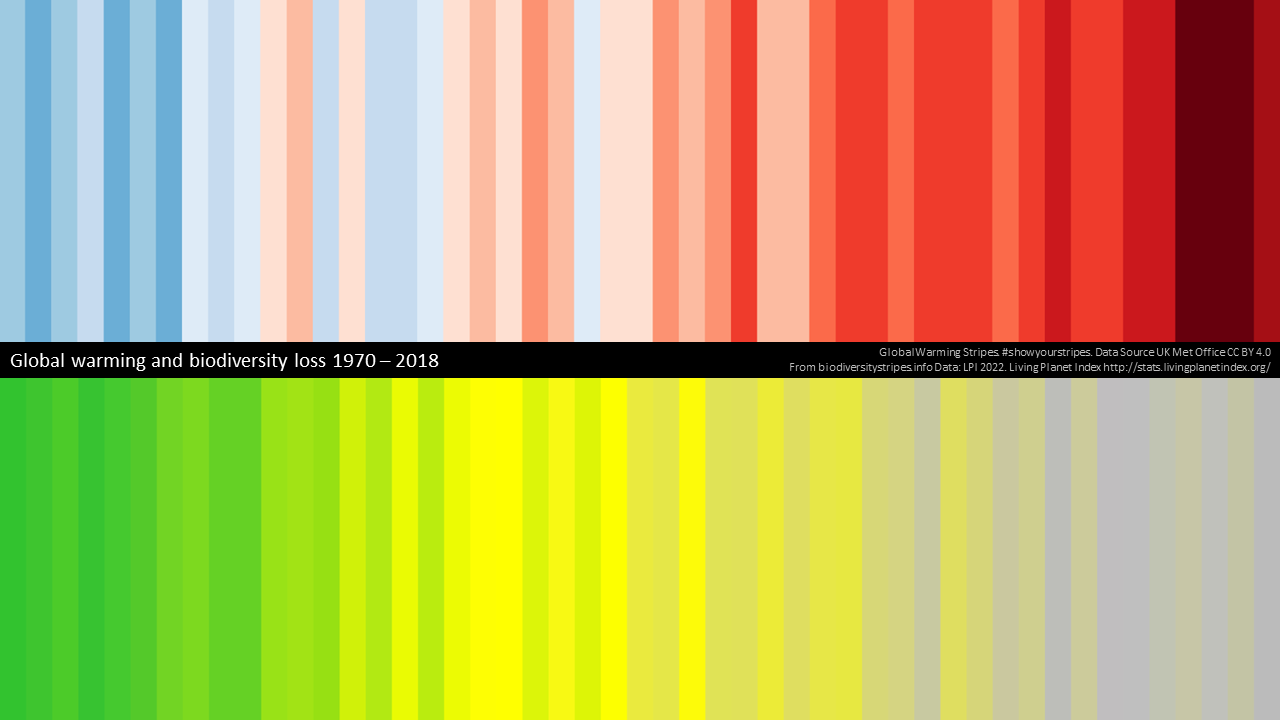
The Living Planet Index provided the initial data. It includes over 20,000 populations of over 4000 species and tells us that the population of mammals, birds, fish, amphibians and reptiles has seen an average drop of 69% globally since 1970. A catastrophic collapse of the wildlife that makes the Earth, and our brief existence on it, so wonderful, so colourful, and so alive. Human actions, our use and control of natural resources, are causing a mass extinction – a loss of colour, a journey from green to grey.
The green to grey stripes worked. Within a few weeks the biodiversity stripes were available on a variety of Greenpeace tops and appeared in the French National Assembly. Around that time, they were also adopted by the global Nature Positive campaign, a coalition of 32 leading NGOs, to put nature at the very heart of the world’s two biggest environmental conventions, COP27 and COP15 where the stripes decorated the Nature Zone. The Nature Positive campaign offered a vision of optimism, by saying we can reverse the decline in biodiversity. The campaign is deceptively simple, it inverts the stripes so that rather than representing decline they provide a vision that the diverse and sometimes fragmented nature community could collaborate around. This biodiversity stripes themed campaign won the Best Environmental Cause Campaign at the Purpose Awards in June 2023. Supported by industry-leading brands such as PRWeek, the awards recognise campaigns that use creative ideas successfully to further positive causes.
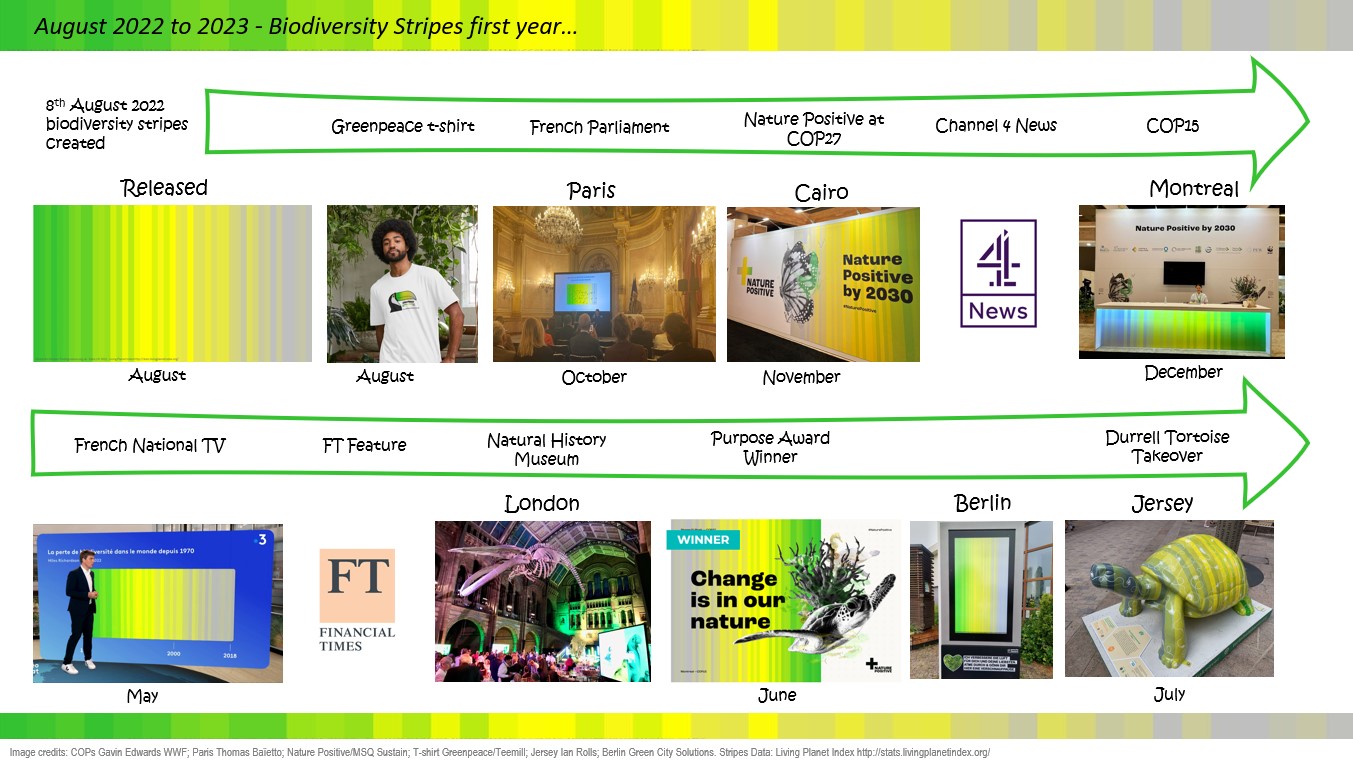
Around the time of COP27 in December 2022 the biodiversity stripes were featured on Channel 4 News and I launched a dedicated home at https://biodiversitystripes.info/ – which was updated to become a twin site of the climate warming stripes in April. Soon after that there was further press and TV coverage, namely in the Financial Times and the national French TV weather forecast. They also appeared at the ClimateNow Conference in Paris and formed the cover of a Spanish Magazine. Highlighting how the concept works without words. The Durrell Tortoise Takeover is one more example of how the stripes can inspire others.
Perhaps most excitingly for me as I was invited to attend, a new set of biodiversity stripes decorated the Hintze Hall at the Natural History Museum in London in June. The new biodiversity stripes provided the theme for the Natural History Museum’s Annual Trustees’ Dinner, attended by 300 guests, from Government ministers to celebrities that care about our natural world. Using the Museum’s 2000 to 2050 Biodiversity Intactness Index the new stripes showed how nature in the UK can recover from previous damage given time, space, and effort. The stripes featured on screens around the hall, menus, invites and the like, with green and yellow lighting illuminating this iconic space. Once again, the message was clear we can, and must, fix our broken relationship with nature.
In addition to raising the awareness of the decline in wildlife another positive is how quickly an individual’s idea can spread with social media and the Internet. The initial blog received 3000 views in the first 24 hours or so, with a total now around 17,000. Add in an update blog that followed and the total is around 20,000 – the new biodiversitystripes.info website has had 1.3 million views since late April. Much of that driven by social media. A few initials tweets launching the stripes in August 2022 received around 100,000 impressions. With a tweet launching biodiversitystripes.info in December getting close to 1.5 million impressions, mainly thanks to a retweet by Greta Thunberg.
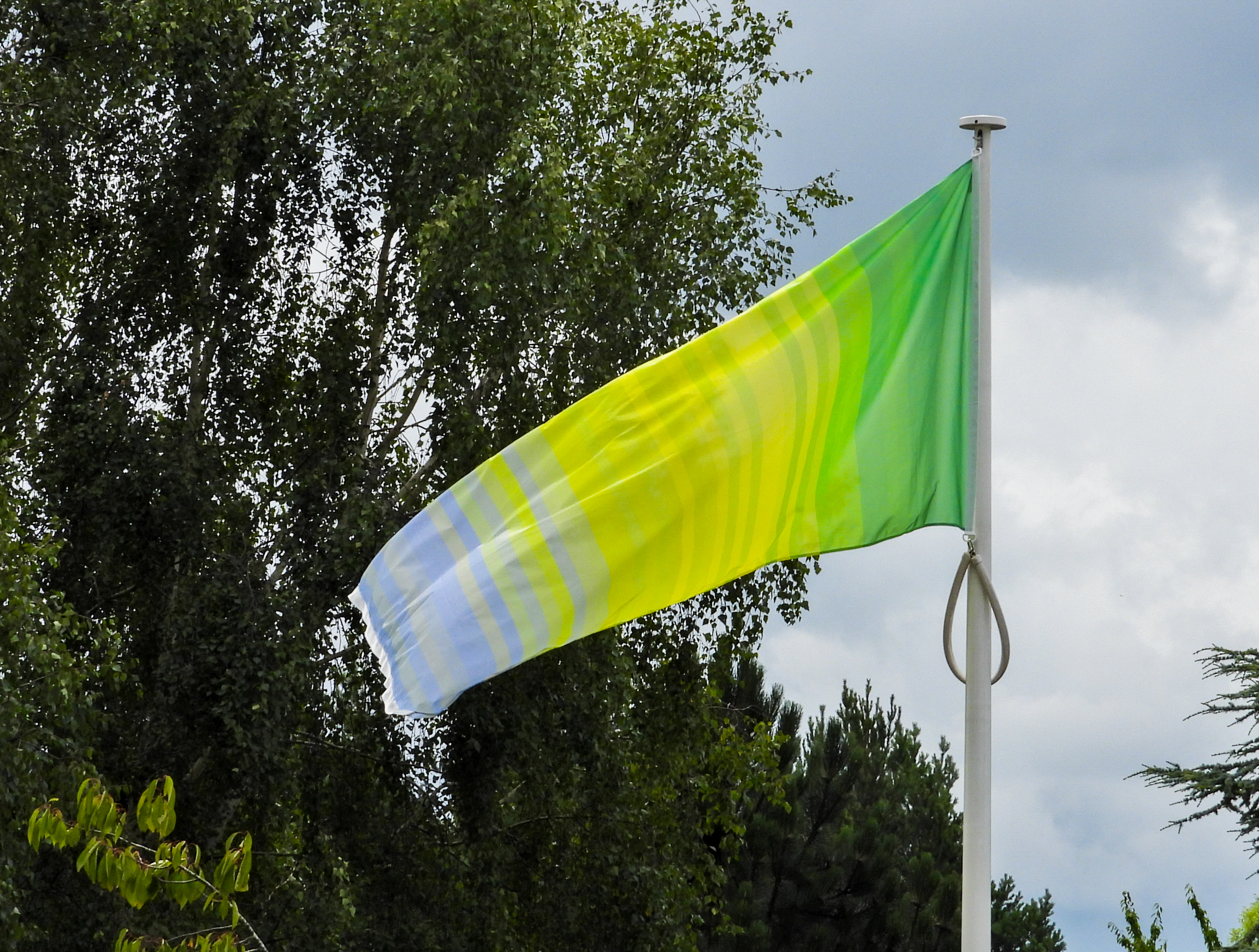
Flying the flag for biodiversity at the University of Derby
What next? Profile wise, year one is tough to beat, but the need to address and reverse the stark loss in biodiversity remains. Greater awareness helps, because when people are satisfied with their natural environment they don’t see the need for change. So, there are millions more people to engage, and it seems the biodiversity stripes can help, both in raising awareness of the problem, but also flipped over to provide a vision of hope. So, I hope to see more of the stripes, with new data stretching further back or existing data projected onto landmarks, in the press, on a football kits or with compelling overlays that engage people with the loss of wildlife.