Something to sing about: Being both in and connected to nature unite human and nature’s wellbeing

Millions of people live with mental health challenges, costing economies billions, while the window to avert the worst impacts of the environmental crises is closing. Engaging with nature offers a low-cost, scalable solution—boosting our wellbeing and inspiring us to act for the planet. But how do visiting nature and feeling connected to it work together to deliver these benefits? Our latest paper, published open access in People and Nature, explores this question, offering insights on how we can foster both human and environmental health.

Previous research has tended to focus on nature exposures, nature connection and key outcomes of wellbeing and environmentalism in isolation. Our latest work unites these aspects, supporting previous results found in isolation, but importantly demonstrating the compensatory and synergistic relationships at play. That is how exposure and connection can balance out weakness in the other, or how they can be combined for a greater effect.

We analysed data from the People and Nature Survey in England, involving thousands of participants (4,588–12,082), to understand how often people visit nature, how connected they feel to it, and how these factors relate to their wellbeing and environmental actions. We also considered the quality of nature in their neighbourhoods, so how good local green spaces are, and how this shapes the picture. Using advanced statistical models, we looked at how nature visits and connectedness interact to influence outcomes like mental wellbeing and nature conservation behaviours.

Something to sing about: Being both in and connected to nature unite human and nature’s wellbeing

Here’s the key aspects of what we found after accounting for the quality of people’s neighbourhood green and natural spaces or how good their passive nature exposure is. Importantly, both visiting nature and feeling connected to it were linked to better wellbeing and more environmental action. But the story gets more interesting when we look at how these two factors work together. For wellbeing, visiting nature more often brought bigger benefits for those who already felt highly connected to nature. However, for people with low connectedness, increasing their sense of connection made a bigger difference, especially if they rarely visited nature.

The chart below helps explain this. For the 12% of people with the lowest nature visits, the circular markers, the feeling that life is worthwhile increases rapidly as nature connection increases from 0 to 40—suggesting that even small steps to build connection can make a big difference. The findings suggest that a jump to very high nature visits may not contribute as much to wellbeing as connection does for this group. This trend levels off around the average level of mean NCI, 50. But as nature increases beyond 60, those with low nature visits reach average levels of feeling life is worthwhile, 6.8. This is when more visits could well deliver more benefit.

For the 44% of people with high visit frequency, the triangular markers, there’s a more consistent rise in wellbeing as nature connection increases. With wellbeing above average once nature connection is above average, hinting at a synergy where visits and connection amplify each other. The same broad trends are seen for happiness and life satisfaction – so both feeling good and functioning well.

The differences between the dotted lines show that more visits to nature can benefit mental wellbeing.  With these benefits being greatest for those who feel the most emotional connection to nature. So, benefits are a product of nature exposure and connection working together. Interestingly, those with the highest level of visits and lowest connection aren’t as well as those with the highest connection and lowest level of visits.

Finally, for some people improving wellbeing through increased nature visit frequency might be difficult, for example disability may make nature visits impractical. For those in this position with very low nature connectedness (e.g., the bottom quartile of the population, where NCI scores are ≤ 31), useful forms of nature based social prescribing may focus on building connectedness in home-based settings, though for those with higher nature connectedness and negligible active nature exposure, increased connectedness may be of less value.

The environmental findings revealed some different dynamics, see the chart below. For people who don’t visit nature often, the circular markers, a stronger connection to nature significantly boosted their environmental actions, particularly at low connectedness levels—showing that building connection can inspire action even without frequent visits. Increased nature connection in the lowest 25% of nature visitors has clear effects. For those who visit nature more often, connection helps, but the effect is less dramatic. For more frequent visitors, a deepening their bond with nature can make a difference to pro-nature action.

The chart also highlights how from levels of nature connection just below the mean of 50, the level of visits makes less difference, as indicated by the lines being close together.

These patterns highlight the complexity of how nature visits and connectedness interact. Sometimes they compensate for each other—for example, lots more visits can make up for low connectedness in driving environmental action. Other times, they work synergistically, like when frequent visits and high connectedness together amplify wellbeing. Understanding these nuances can help us target interventions more effectively, ensuring we reach people where they are in their nature journey.

Implications

So, what does this mean for policy ideas like ‘Green in 15’ and practice? Although differential benefits are a challenge for policy making, the results demonstrate a straightforward principle: for maximum benefit to help unite both human and nature’s wellbeing there is a need to increase opportunities to access to high quality local nature and to build individual levels of nature connectedness.

For wellbeing, nature-based interventions like social prescribing should prioritise building connectedness, especially for those with low connection or limited access to nature. For environmental action, increasing nature visits can spark change for those with lower connectedness, while deepening connection can amplify conservation efforts among frequent visitors.

Increasing nature access and thereby visits is the most frequent objective to realise the wellbeing benefits of nature, with little consideration of the opportunity to deliver the co-benefit of environmental behaviour. However, our findings suggest that environmental benefits are more likely to come from strategies which increase nature connectedness than strategies which increase nature visits.

Focussing on access and visits to nature is more straightforward, but we know nature connection can be targeted and improved. Indeed, it is a powerful strategy for transformative change recommended by IPBES.

Key takeaways

Finding that those with the highest level of visits and lowest connection aren’t as well as those with the highest connection and lowest level of visits is a reminder to move beyond access only policy focus. Doing so will bring the maximum benefits for human health and environmental actions. So key takeaways are:

 Foster Nature Connectedness

  • Develop programs and campaigns using approaches like the pathways to nature connectedness that encourage interaction with nature to build meaningful and emotional connections to nature across education, health, and urban planning.

Target Interventions Based on Connection and Nature Visit Levels

  • For individuals with low nature connectedness (bottom 25%), prioritise initiatives that build bonds with nature, as small increases in connectedness could well yield significant wellbeing and pro-environmental behaviour gains – plus are likely to motivate more visits creating a virtuous cycle.
  • For those already connected but with low visit frequency, encourage more nature visits to amplify synergistic benefits for wellbeing.
  • Incorporate Nature-Based Social Prescribing into healthcare systems, particularly for mental health.
  • For individuals unable to visit nature frequently, prescribe home-based activities to boost connectedness.

Nature Rich Green Spaces

  • Nature rich neighbourhood green spaces can encourage more visits and be designed to foster connectedness. Urban design can help by making nature visible and inviting. Go beyond green to create and maintain accessible nature rich spaces with more nature to engage with.

Encourage Environmental Action Through Connection

  • Promote campaigns that strengthen nature connectedness to drive conservation behaviours, especially among infrequent nature visitors. The research shows that connection significantly boosts environmental action even without frequent visits.

Leverage the synergistic effects of nature visits and connection

  • Encourage frequent nature visits while simultaneously fostering a deeper emotional connection to nature.

These policies are relatively low-cost, scalable, and address both mental health and environmental issues by leveraging the compensatory and synergistic effects of nature exposure and connectedness.

Final thoughts

Previous research has tended to focus on nature exposures, nature connection and key outcomes of wellbeing and environmentalism in isolation. The present work unites these aspects, supporting previous results found in isolation, but importantly demonstrating the compensatory and synergistic relationships at play.

These findings offer a roadmap for tackling mental health and environmental crises together. By understanding how nature visits and connectedness interact, we can design smarter interventions that maximize benefits for people and the planet. It’s a reminder that our relationship with nature is complex, but full of potential.


Posted in Uncategorized | Leave a comment

Nature Connections 2025: 16-17th June 2025

Nature Connections 2025 on the 16 & 17th June 2025 promises to be bigger than better than ever. Across two exciting venues in Derby, the 7th of the Nature Connections series will include two days of talks, workshops and networking with researchers, practitioners and professionals exploring and growing Nature Connection. You can book your place here.

We will start by River Derwent in Derby city centre at The Museum of Making at the Silk Mill, the site of the world’s first factory. The starting point of an industrial relationship with nature, so a great place to hear the very latest on forging closer connections with nature.

Our second venue, new for 2025, is the amazing Electric Daisy which will host workshops, nature connection activities, space to relax and connect with other attendees, and the conference meal, drinks and networking on Monday night. The Electric Daisy is the brainchild of Down To Earth Regen, a forgotten space that has been transformed into something extraordinary—it’s an urban oasis, garden and a haven for nature in the heart of Derby.

Electric Daisy from electricdaisy.org

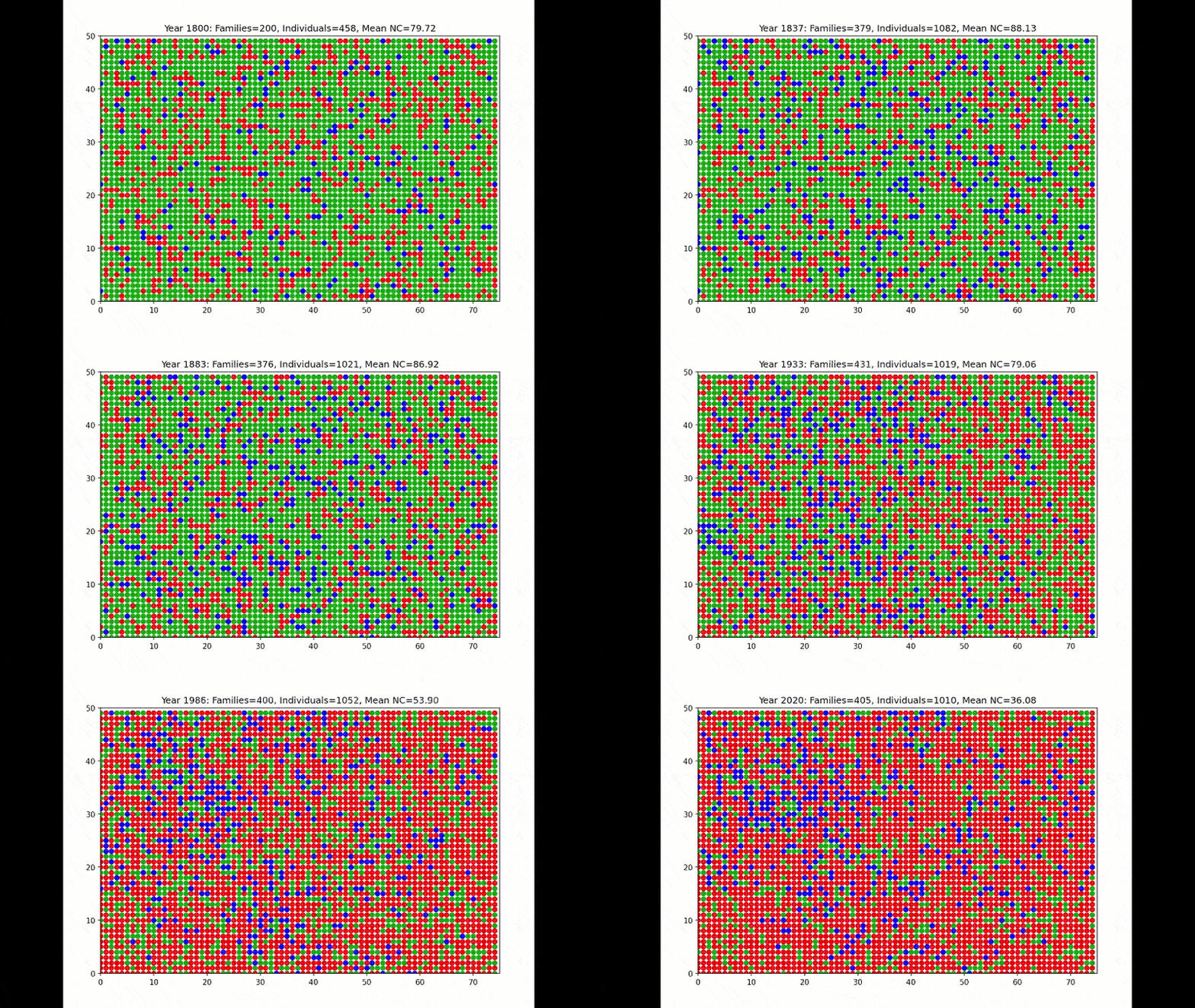
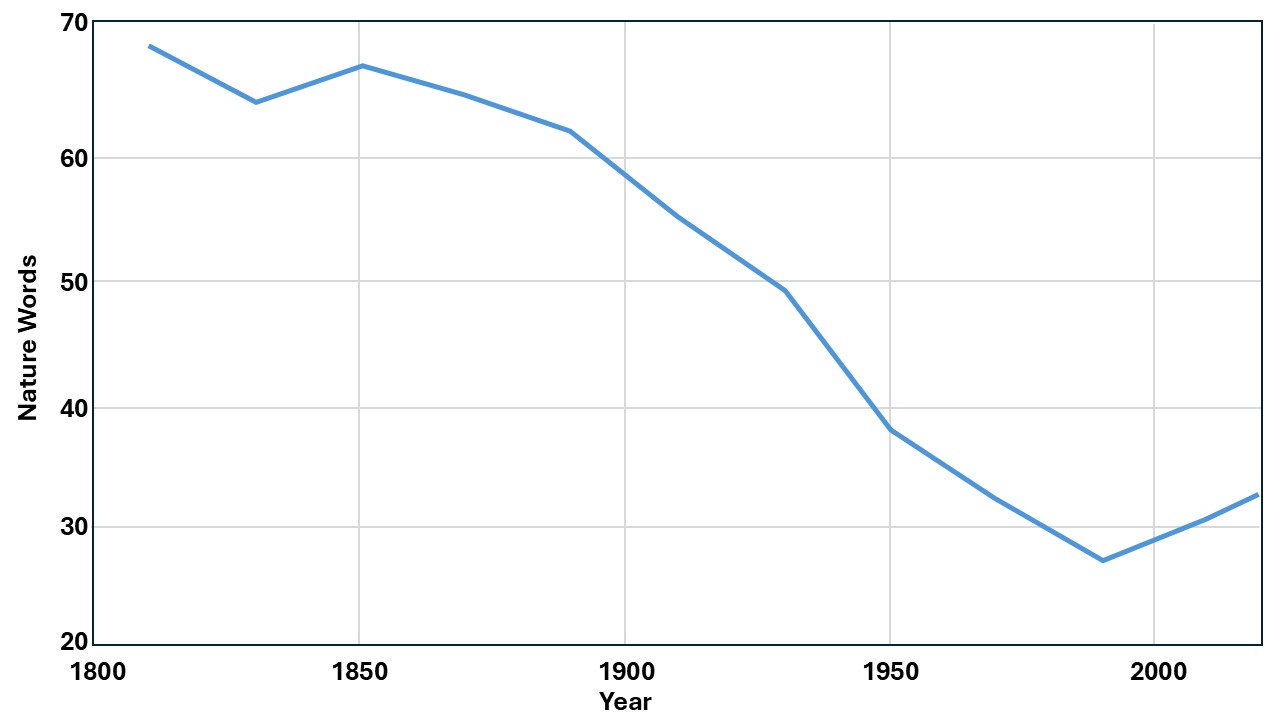
Our keynote speakers are David Drake, Director for People and Nature at Natural England), Dr Jessica Tipton, head of the National Education Nature Park at the Natural History Museum, and Prof. Miles Richardson, who will be sharing his very latest research into nature connection over the last two hundred years – and through to 2050!

There’s a programme of talks on understanding and deepening human-nature relationships, arts-based approaches to connecting people with nature, nature connection for children and young people, engaging people with nature, scaling and embedding nature connection, nature connection for health and wellbeing. These include a chance to hear from Lawyers for Nature on We Are Nature and about the largest urban rewilding project in the UK – that’s also in Derby. Plus, you can take part in a roundtable on Nature Connection in Schools.

The Silk Mill

As well as a packed programme of talks, there are workshops on evaluating nature connection, arts and movement-based workshops, a nature poetry workshop, nature connection walk to a nearby park, and more. There will be more spaces this year to meet with others or take part in nature-based activities.

Ten years on from the first Nature Connections, the event has grown into something very special. We look forward to welcoming you.


Posted in Uncategorized | 2 Comments

Encounter: Unlocking Nature Connection Through Words

The app Encounter has launched. It is a guided nature journal that lives on your phone, designed to help you notice what’s around you and deepen your connection to nature. The app offers inspiration and ideas tailored to your area and the time of year so that you can create your own nature diary entries. You can also tag the species and nature you see.

This free app, created by nature writer Melissa Harrison, with input from me along the way, helps you build a habit of noticing nature. Recording your experiences is a powerful way to boost nature connectedness, benefiting both your wellbeing and the environment. Encounter provides tailored tips and prompts to guide you, highlighting what to look and listen for, from the first spring butterflies to hedgerow fruit. You’ll also find invitations to join citizen science projects or local conservation initiatives, plus articles from Encounter’s partners to deepen your understanding of the wildlife you live alongside.

Encounter Nature

We know jotting down the good things in nature improves nature connection and writing about nature helps weave the emotional and biological threads that form a deep bond to the natural world. First, it helps understand that we’re not separate from nature, we’re part of it, flesh-and-blood creatures tied to the earth like every bird and tree. Second, it’s that quiet pull you feel when you watch the setting sun or hear waves lapping on the shore. Nature connection is much more than time outdoors; the two threads of knowing we belong and feeling it deep down cause a shift where the boundary between you and nature blurs into nothing.

Why does this matter? People with a strong tie to nature don’t just smile more or feel their days are more worthwhile—though they do. They’re also more likely to care about the birds, the trees, or the air we all breathe. This isn’t just a feel-good fix for our minds; it’s a lifeline for the nature crisis too. Nature connection unites our own wellbeing with that of the wider natural world.

So, how do we find this special relationship? The first step is to tune in and take notice of the birds chirping or the wind rustling the leaves. Too often, our busy lives take over, and others vie for our attention. Most people never stop to hear a blackbird sing. Too often, we can be tuned out, lost in our own noise. But when you start noticing—truly seeing, hearing, feeling—the soft fascination of nature wraps around you. These fleeting moments don’t need a lot of time; they can sneak in between the busyness. And if you jot them down, something magical can happen—writing about nature deepens those moments and roots them in place.

This writing doesn’t need to be a masterpiece. A couple of lines about a bright flower or a crow’s call plants these moments as seeds. It’s the act of writing that matters. There’s no need to worry about facts and figures; a few short, positive lines about the good things in nature is great. A paragraph or two is even better. Nature always has a story to tell, and for us, constructing stories is a natural process that brings coherence and meaning. Simply, noticing nature and weaving each moment together helps the two threads of feeling and belonging to form.

So, join in and be part of a collaborative project to reconnect people with the natural world we all share. Download Encounter and start weaving your own story with nature.

Posted in Uncategorized | Leave a comment

Introducing Heritage Connectedness: Connections to people, nature and place across time

Humans possess an innate desire for connectedness, a fundamental aspect of health and wellness that traditionally emphasises social bonds. Having started to think about nature connection across time we’ve been exploring the concept of ‘heritage connection’. Our latest research paper introduces heritage connectedness – a psychological construct with cognitive, emotional, and behavioural dimensions. This subjective sense of relationship with heritage is distinct yet complementary form of connectedness, enriching the interplay between people, nature, and place across time. The research sought to understand what heritage connection is and how well it explains wellbeing and pro-environmental behaviours. It has been published in the journal, The Historic Environment: Policy & Practice.

Heritage connectedness is proposed to contribute to both personal wellbeing and planetary health, aligning with frameworks like “One Health” which recognise human wellbeing as intertwined with a healthy natural world. Heritage connectedness extends beyond mere exposure to historic sites or objects, suggesting that a deeper, enduring relationship with heritage may independently foster wellbeing and environmental stewardship.

While previous studies have linked engagement with heritage—such as visiting historic spaces or participating in conservation activities—to psychological benefits like stronger identity and belonging, the subjective sense of connection to heritage has been underexplored. Drawing parallels with nature connectedness, where a personal relationship with nature predicts wellbeing more strongly than proximity alone, the paper suggests that heritage connectedness could similarly amplify the benefits of heritage engagement.

The research sought to understand what heritage connection is and whether it explains wellbeing and pro-environmental behaviours. We explored this, firstly through focus groups and then a survey of 1,823 adults. The study adapts an existing nature connectedness scale, the Inclusion of Nature in Self (INS), to measure heritage connectedness, focusing on heritage within a five-minute walk of participants’ homes in this study. The survey also included measures of social and nature connectedness, mental wellbeing (e.g., Warwick-Edinburgh Mental Well-being Scale), and environmental behaviours (e.g., Pro-nature Conservation Behaviour Scale). Socio-demographic factors such as age, sex, and employment status were included as benchmarks.

What is People’s understanding of Heritage Connectedness?

Participants in the focus groups described heritage connectedness as a multifaceted bond involving cognitive (knowledge and understanding), emotional (affect and feeling), and behavioural (engagement and action) dimensions. Tangible aspects like historic buildings and intangible elements like cultural traditions were both seen as integral to this connection.

Is Heritage Connectedness associated with Mental Wellbeing?

Survey findings revealed that people can meaningfully rate their heritage connectedness and that this sense of connection is distinct from social and nature connectedness. We found that heritage connectedness significantly predicted various wellbeing outcomes—life satisfaction, happiness, personal growth, and reduced depression and anxiety—often outperforming traditional benchmarks like marital status or social grade. It explained a very similar level of in mental wellbeing than social or nature connectedness, suggesting its potential inclusion in holistic health models.

Is Heritage Connectedness associated with Environmentalism?

Regarding environmentalism, heritage connectedness was linked to pro-nature conservation behaviours and a willingness to sacrifice for the environment, though its influence was weaker than that of nature connectedness.

The Importance of Connectedness to People, Place and Nature.

The research suggests that ‘heritage connectedness’ is a similar sort of construct to nature and social connectedness, offering a sense of connectedness that brings wellbeing and behavioural benefits. If people relate to heritage in ways that parallel relations with nature and people, it is possible that it is the relationship itself that matters for wellbeing and behaviour rather than heritage places, objects and activities. The findings also support the importance of relational worldviews that emphasise interconnectedness.

The figure below attempts to capture these relationships, highlighting what might be termed a ‘connectedness space’ between people and nature and their shared past. The figure highlights the need to facilitate connections between people and nature, plus people and heritage, for wellbeing and a sustainable future. Connections, be they social, natural or to heritage, need to be present and available; it helps for them to be local. Without local social connections people can become lonely and having nature nearby can boost wellbeing and physical health. Like the ecology of the Earth, everything is related and as conscious, storytelling, social beings that includes heritage. Broadly connectedness is essential for life and the health and wellbeing of that life.

The Connectedness Space: People, nature and place across time for wellbeing.

The results underscore heritage connectedness as a psychological construct with cognitive, emotional, and behavioural dimensions, akin to other forms of connectedness. It offers a sense of anchoring and belonging that enhances wellbeing, The paper proposes that fostering heritage connectedness—through increased exposure or tailored interventions—could improve mental health, mirroring successful nature-based approaches. Its environmental links further suggest a role in sustainability strategies, where appreciation of heritage might encourage stewardship of both cultural and natural resources.

Of course, as with the relatively recent construct of nature connectedness, there is a need for further research to understand heritage connectedness. Future research could refine definitions and metrics, develop interventions, and explore causal pathways, drawing on the trajectory of nature connectedness studies.

In conclusion, heritage connectedness emerges as a distinct yet complementary form of connectedness, enriching the interplay between people, nature, and place across time. Its associations with wellbeing and environmentalism highlight its potential as a foundation for feeling good and functioning well, positioning it as a vital component of a connected, sustainable future.


Richardson, M., Butler, C. W., Alcock, I., Tindley, A., Sheffield, D., & White, P. C. L. (2025). Introducing Heritage Connectedness: Connections to People, Nature and Place Across Time are Associated with Wellbeing and Environmentalism. The Historic Environment: Policy & Practice, 1–21. https://doi.org/10.1080/17567505.2025.2482163

Posted in Uncategorized | 1 Comment

From Mountains to Meadows: The Role of Environmental Features in Nature Connectedness

Our latest research paper, published in Landscape and Urban Planning, explores which environmental features make us feel most connected to nature. This study highlights the potential of landscape planning and design in addressing the growing disconnection between humans and the natural world.

The study took a new approach, using network analysis to dig into the features that shape our nature connection experiences. We asked 205 people in the UK to recall four moments when they felt connected to nature, noting what they saw around them—like wild animals, mountains, or even paved roads—and how connected they felt. By mapping these features as a network, we could see which ones matter most and how they interact.

The features that stood out most positively in our network were those tied to wild, rural landscapes—think nice weather, wild nature, meadows, mountains, and both small and large animals, alongside oceans. These elements were consistently present in people’s most nature-connected moments, suggesting they have a unique power to draw us closer to the natural world. Rivers, ponds, trails, sand, and plants also had a positive influence, though their impact was less pronounced compared to the wilder features.

The most notable positive members of the network (see figure) were nice weather, wild nature, meadows, mountains, small and large animals, and oceans. In essence, these features were highly and uniquely present in peoples’ nature-connection experiences. Rivers, ponds, trails, sand, and plants had a medium positive influence, but their importance was notably weaker than the aforementioned items.

The detailed situation network of environmental features that impact nature connectedness.

Note. Nodes: Larger nodes indicate greater importance; Green nodes had a positive importance; Red nodes had a negative importance for connectedness. Edges: Thicker bands indicate stronger relationships; Green bands indicate a positive relationship; Red bands indicate a negative relationship. Label colour: The colour of labels was determined by the cluster assignment derived from the network community structure.

On the other hand, the features that most disrupted nature connection were clear signs of human presence—paved roads, motor vehicles, and trash were the biggest culprits, often absent from people’s nature-connected experiences. Poor weather, technology, and human-made buildings also had a negative effect, though less strongly.

Key Takeaways for a Greener Future

So, what does this mean for designing spaces that reconnect us with nature? First, it’s clear we need more rewilding—bringing back wild spaces with animals and rugged landscapes, not just adding more urban parks. Limiting human-made features is just as crucial. Think fewer buildings, roads, and litter in natural spaces—perhaps through zoning or “do not disturb” campaigns. Trails are a great addition—in fact, they were the most central part of the network, meaning they seemed to help people engage with the other important wilder features. But things like benches or signs? They’re less important and might even make a space feel too human if overdone.

For urban areas, where wild nature isn’t always an option, we can still make a difference. The trick is to make parks feel wilder—using trees to hide buildings or muffle noise, creating quiet, untamed corners while balancing safety concerns. It’s not just about adding more trees or meadows; it’s about crafting spaces that let us feel immersed in nature, even in the city.

Why This Matters

These findings give landscape planners and policymakers a roadmap to strengthen our bond with nature. By focusing on wild, rural features and dialling back human impact, we can create environments that not only support biodiversity but also nurture our well-being. It’s a reminder that nature connection isn’t just about access—it’s about the quality of the experience. What features make you feel closest to nature? Let’s keep exploring how we can design a world where nature and people thrive together.


Lengieza, M. L., Richardson, M. & Hughes, J. P. (2025). Feature networks: The environmental features that are central to nature- connectedness experiences. Landscape and Urban Planning doi.org/10.1016/j.landurbplan.2025.105362

Posted in Uncategorized | Leave a comment