
Four years ago, in August 2022, I published the first Biodiversity Stripes. Inspired by Professor Ed Hawkins’ climate stripes, the idea was simple: create a visual language for biodiversity loss that transformed data into something that caught people’s attention and told a story in an instant.
Since then, there have been updates in 2024 and now again in 2026, with the release of the latest WWF Living Planet Report. As a result, two additional stripes have been added to the suite of biodiversity stripes, extending the visualisation with the latest available data.
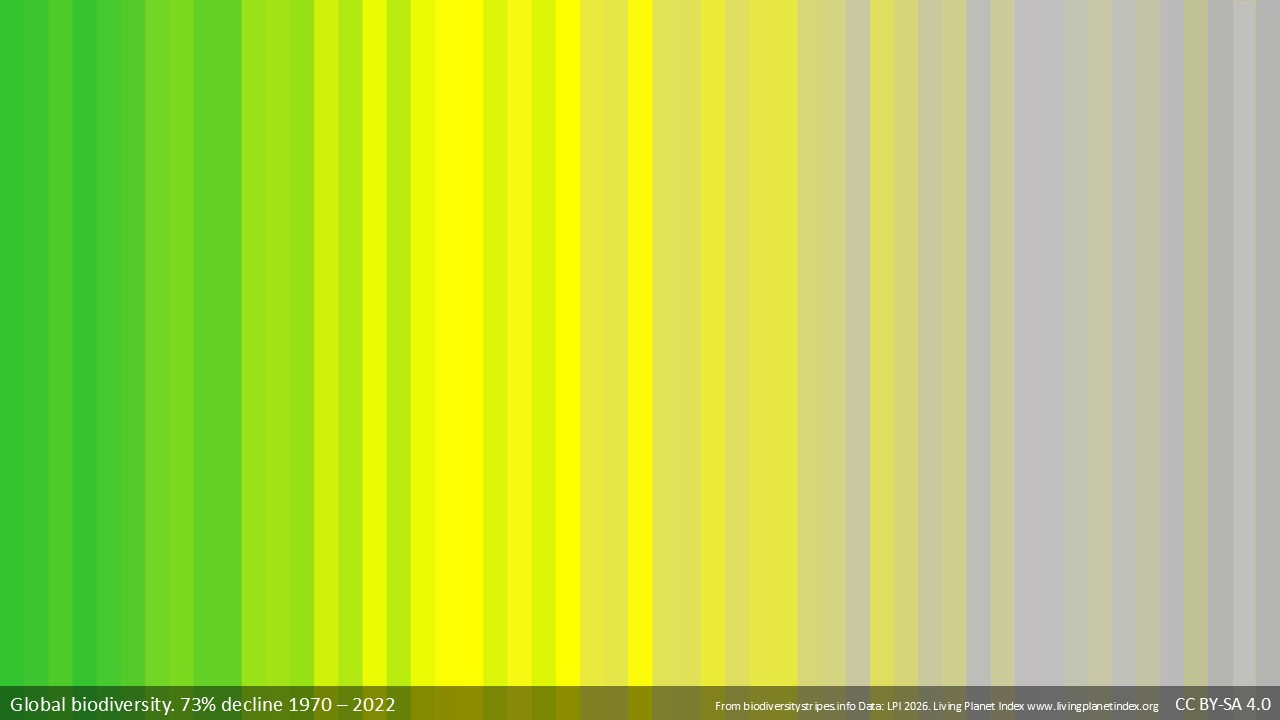
The Latest Global Biodiversity Stripes
When I created the original stripes, I hoped they might help raise awareness of biodiversity loss, a crisis that receives far less attention than climate change despite being every bit as important. The concept was intentionally simple: a journey from green to grey, visualising the decline in wildlife populations recorded by the Living Planet Index.
What has happened since has been something of an unexpected journey, and one that keeps on growing. The stripes were adopted by the global Nature Positive campaign and featured prominently around the world at several COPs. They have appeared at the Natural History Museum, on television and in newspapers, on products, artwork and educational materials. Together, these uses demonstrate a strong appetite for new ways of communicating the biodiversity crisis.
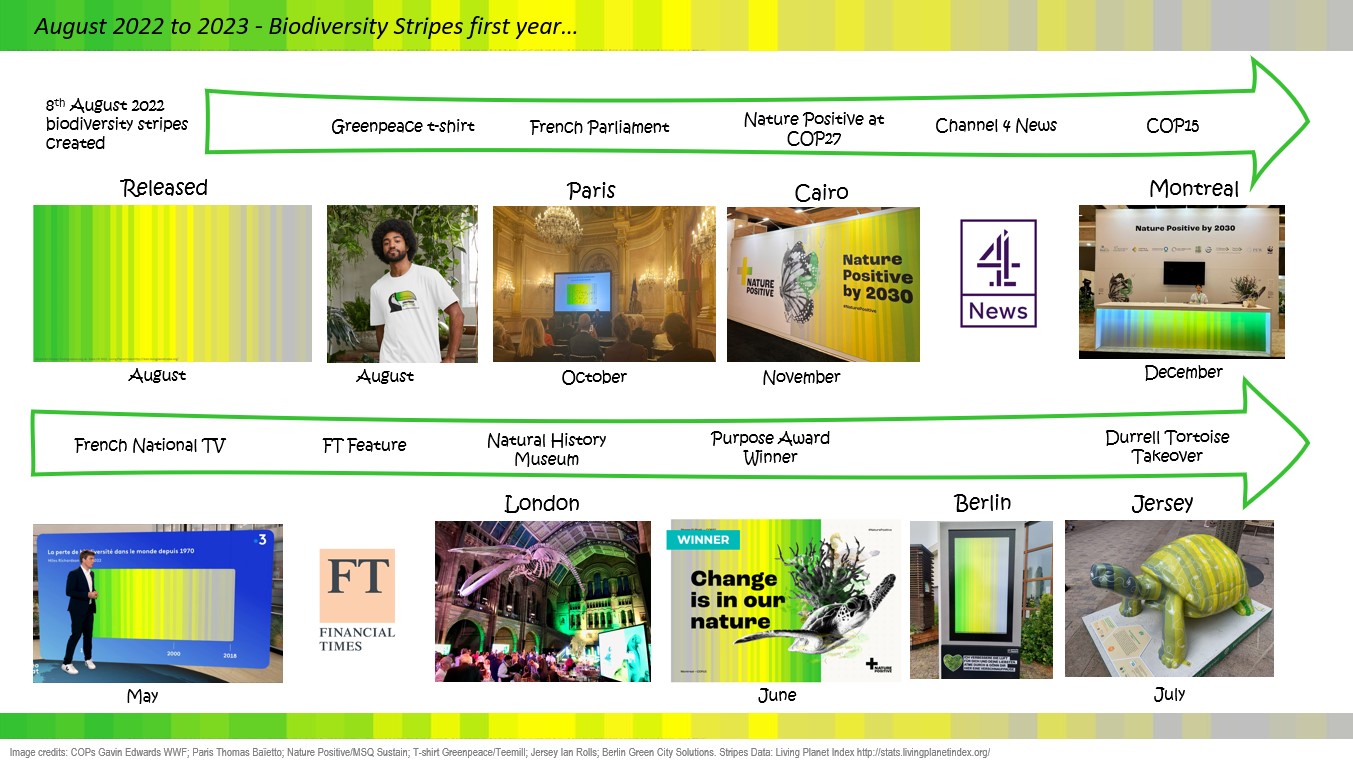
Year 1 Stripes Story
That would be success enough, but more recently the biodiversity stripes have found an enthusiastic champion in the Desert Vipers cricket team (see video summary). First appearing on their Sustainability Match kit in 2025, the stripes have continued to feature in the team’s sustainability work, including the 2026 Global Super League in Guyana and the team’s growing involvement with the Global Biodiversity Alliance. By wearing the updated biodiversity stripes, they’re helping bring one of the world’s most important environmental stories to new audiences and showing how sport can inspire action for nature.
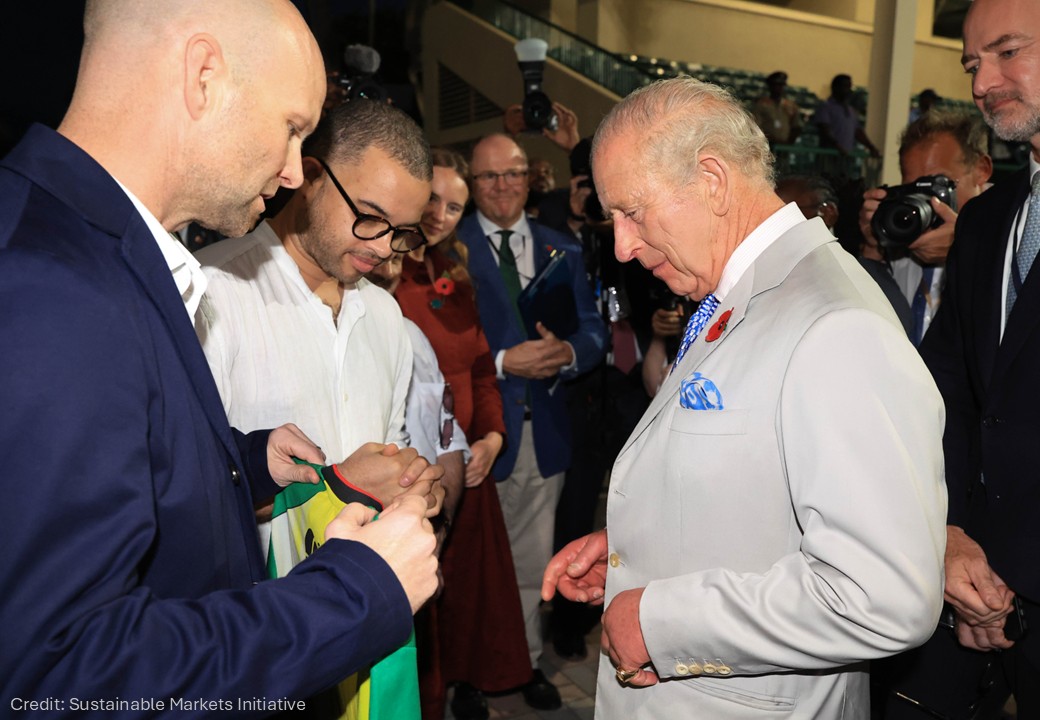
King Charles III examines the Sustainability Match Jersey
Perhaps the most unexpected moment came recently, when King Charles III was presented with the Desert Vipers 2026 biodiversity stripes themed jersey during sustainability events linked to the Commonwealth Heads of Government Meeting in Antigua. Seeing a visualisation that began as a blog post created at home in Derby being used by a professional sports team and presented within international sustainability discussions illustrates how widely the message has travelled beyond traditional environmental circles.
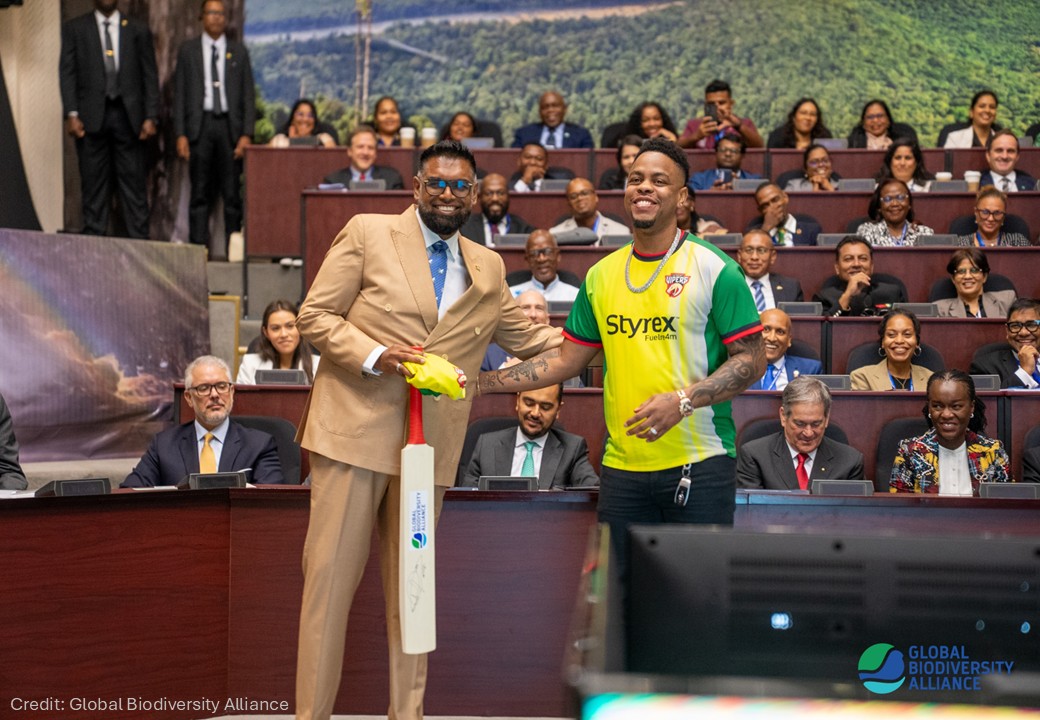
Guyanese cricketer Shimron Hetmyer launching the stripes themed Sustainability Kit with Guyana’s President, Dr. Irfaan Ali, at the Global Biodiversity Alliance Summit in Georgetown, Guyana.
Yet despite the awards, media coverage, international events and growing recognition, the purpose of the Biodiversity Stripes remains exactly the same as it was in 2022: to help people see the scale of biodiversity loss and better understand what it means. The stripes have travelled much further than I ever imagined, but they continue to tell a simple story. Wildlife is declining, our relationship with nature needs repairing, and greater awareness is an essential step towards positive change.
The updated Global Biodiversity Stripes can be viewed at biodiversitystripes.info.


