
New report reveals the state of nature connection practice across the UK
The past decade has seen a marked shift in awareness and understanding about nature connection. There has been exponential growth in number of research papers referring to nature connectedness – from 150 papers a decade ago to over 2900 in 2025.
With clear evidence of the links between human-nature relationships, biodiversity, and wellbeing, nature connection now features in policies, strategies, interventions, spaces, and events around the world. The growth of the cross-sector Nature Connectedness Network (NCN), with over 650 members whose work focuses on connecting people with the rest of nature, is indicative of an expanding group of professionals working in this area. However, we know little about the range of work being done, the opportunities and challenges faced, and the perceptions and hopes of these professionals.
The State of Nature Connection in the UK report sets out to fill in some of these gaps, to explore the practices, perspectives and visions of professionals with a shared ambition to help more people feel more deeply connected with the rest of the natural world.
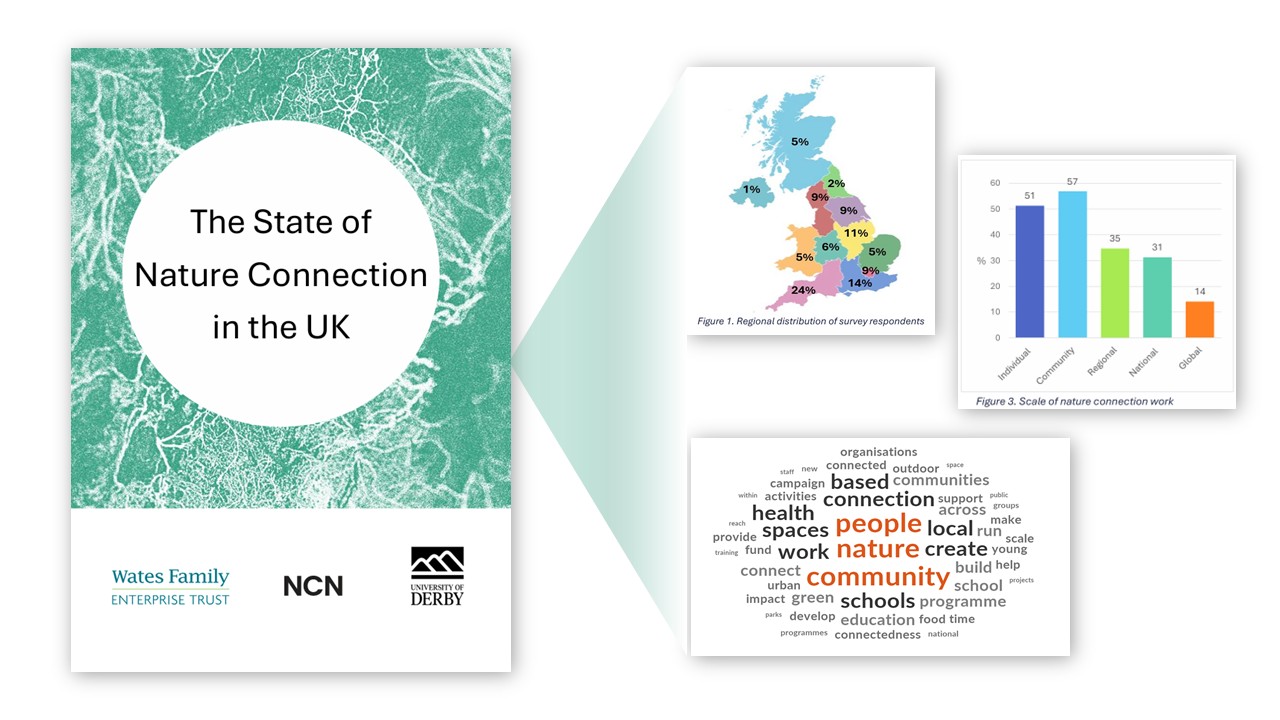
Based on responses from 199 professionals working across the UK, the report reveals an active, collaborative, and optimistic field. It spans research, practice and policy, with professionals working within and across environmental, health, education, arts, business and community sectors at multiple scales – from supporting individuals to connect with nature, through to global initiatives working towards deep cultural shifts in human-nature relationships. Connecting people with nature was a purpose and mission for many organisations, and most organisations use evidence-based frameworks, work collaboratively with others, and are part of networks and communities of practice.
Respondents perceive increased nature connectedness amongst those they work with, and many report increased demand for services. While most respondents are optimistic about the direction of societal nature connectedness, there are indications that they overestimate the gap between their own levels of nature connectedness and those of the general public.
While there is evidence of collaboration already happening across the field, stronger collaborations and connections across organisations and between sectors were identified as key opportunities, while limited time and funding were key barriers.
We also asked respondents how they would spend £10 million over two years. Responses focused heavily on community-based initiatives, alongside education and health related programmes. There was an emphasis on growing capacity, creating spaces and infrastructure to bring people and nature together, public campaigns, and awareness raising. Invitations to share visions of a more deeply nature-connected society resulted in rich accounts of changes in people’s ways of being, everyday life, places and systems, supporting stronger communities and nature connection embedded across education, health and wider society.
The results paint a picture of a diverse ecosystem of professionals and practitioners, with many working like mycelium to connect and nourish people and the wider natural world, like trees and woodland offering shelter, support and community, like pollinators who share and fertilise knowledge and practice, like rivers that move, carry and connect, and like compost who regenerate and create conditions for growth and renewal.


