10 years of the Nature Connectedness Research Group

The Nature Connectedness Research Group is 10 years old! I set it up in May 2013. It seemed intuitive to me that the human relationship with nature mattered and was at the heart of environmental crises. Looking back to 2013 I founded it to ‘understand people’s connection to the natural environment and design and evaluate local interventions in order to improve connectedness; bringing about the associated benefits in well-being and conservation behaviour’ – it’s gone well! The group has produced a large amount of research, applied it widely and been recognised for its work – winning two Green Gown Research with Impact awards in 2021 and being named by Universities UK as one of the UK’s 100 best breakthroughs for its impact.

With increased recognition of the human-nature relationship being a root cause of the environmental crises, the Nature Connectedness Research Group is doing what it can to lead efforts to create a new relationship with nature, through research to understand, application through frameworks and interventions and sharing guidance.

NCRG Research Themes

Our Research

Clearly, a research group starts with research. The Nature Connectedness Research Group was perhaps the first to focus squarely in this area. In 2013 only a few research papers used the term ‘nature connectedness’ in their title with 77 using the term at all. By 2022 that 77 had grown to 1410.

The research projects have ranged from small student projects, those done on a shoestring (or zero!) budget to two large scale £1+ million consortium programmes – Improving Wellbeing through Urban Nature (2016 to 2019) and Connected Treescapes (2021 to present).

Noticing the good things in urban nature

The projects have produced a lot of research findings. I’m unsure how many now, but in that time getting on for 100 journal papers involving over 20 University of Derby staff have been published – there’s a list of some below. They can be split into a few areas of focus.

Environmental Factors: The group has examined the influence of environmental factors on nature connectedness. From investigating the impact of avian biodiversity in urban green spaces on human emotions to exploring the association between visible garden biodiversity and nature connectedness, the group has highlighted the significance of nature’s diversity in shaping human well-being.

Mental Well-being and Health: Researchers have explored the links between nature connectedness and various aspects of well-being, including eudaimonic well-being, mood, and mental health. Investigations into the effects of forest-bathing, mindfulness-based interventions, nature writing tasks, and nature-based positive psychological interventions have demonstrated the potential of nature connection approaches to enhance mental well-being and promote emotion regulation. We have explored green prescriptions and nature connectedness approaches for populations including those living with addiction, psychopathy, paranoia, disordered eating, and anxiety.

Psychological Dimensions: Such as the relationship between nature connectedness, nonattachment, and engagement with nature’s beauty has revealed how individuals can derive meaning and fulfilment from their connection to the natural world. The group has investigated the connection between nature connectedness and dark personality traits, unravelling the complex interplay between individual traits and environmental attitudes.

Measurement: Another area of focus has been developing measures (e.g. the NCI and ProCoBs) so that researchers can better understand the factors that drive individuals to engage in sustainable practices. Furthermore, the group has examined the influence of nature connectedness on parental self-efficacy, highlighting the role of caregivers in fostering nature connection in their children. Our work has suggested that nature connectedness is a key metric for sustainable future.

Interventions and Engagement: Understanding how to effectively connect people with nature has been a core focus of the group’s research. Through evaluating interventions such as green outdoor educational programs and outdoor, arts-based activities, the researchers have identified strategies to foster nature connectedness. Additionally, the exploration of the impact of the “30 days wild” campaign has shed light on the potential of large-scale initiatives to enhance nature connectedness and well-being.

Details of much of this work can be found by searching this site.

Members of the Nature Connectedness Research Group 2019

Our Impact

As a former engineer with a focus on human factors (the fit between people and the things they do) solutions are important to me. And the research above has been applied wherever possible. It falls into three themes.

Improving the human-nature relationship through via the pathways to nature connectedness.

Our pathways to nature connectedness design framework has been widely adopted by organisations in the UK and around the world to help connect people with nature. We have worked with a range of partners, including Natural England, National Trust, and the Wildlife Trusts and other environmental NGOs and organisations of all shapes and sizes across public, charitable, and private sectors. Our research and knowledge exchange work is broad in scope, contributing to the visitor experience and engagement at nature reserves, activities within green social prescribing and mental wellness programmes, policy briefings, design of buildings and landscapes, artworks, leadership development, and educational programmes. Case studies on the ‘Pathways to Nature Connectedness’ from the organisations above and others such as Plymouth City Council can be found in our Nature Connection Handbook.

The Nature Connection Handbook

The pathways also inform the Government’s Green Influencers scheme and the Green Recovery Challenge Fund guidance thereby informing initiatives such as Generation Green where organisations such as the YHA, Scouts, National Parks connect young people with nature. In 2015, the Wildlife Trusts used the pathways to inform the design of their innovative ‘30 Days Wild’ national programme with over one million people taking part in the first 5 years. In 2018, the National Trust adopted the pathways as a framework they could apply to the design of visitor experience activities and programmes.  One part of this work was a refresh of the national campaign “50 things to do before you’re 11¾” which was launched nationally in Easter 2019. The pathways have also informed physical spaces, for example the Butterfly House at Durrell Zoo and Silence at Yorkshire Sculpture Park.

The utility of the pathways framework for application across contexts to improve human-nature relations – from design of local programmes to policy and urban places has been included in policy briefings and evidence reviews such as Stockholm+50, a UN science evidence review. For more transformative change, we are developing the use of the pathways to inform urban design and to inform policy and culture through the use of system leverage points for transformational change.

Nature connection for mental health and wellbeing

Our nature connection focussed interventions have led to clinically significant improvements in mental health, with the research informing policy briefings, green social prescription schemes and the Mental Health Foundation’s 2021 Mental Health Awareness Week – the world’s largest mental health week campaign. Our ‘three good things in nature’ approach has part of a green prescription pilot run by RSPB Scotland. Our research also informs the work of Mind, again see our Nature Connection Handbook.

Nature connection and pro-nature behaviour measures.

We were part of the team that developed the Nature Connection Index (NCI) a measure designed to be suitable for both children and adults in populations surveys. The NCI helped us to be among the first to identify the ‘teenage dip’ in nature connection.

We have also created the first scale to measure pro-nature conservation behaviours, the Pro-Nature Conservation Behaviour Scale – or ProCoBS for short. ProCoBS is a psychometrically validated scale measuring active behaviours that specifically support the conservation of biodiversity. ProCoBS has enabled us to do work that showed that being connected to nature plays a vital role in pro-nature conservation behaviours.

Both measures have been included in Natural England’s People & Nature Survey, enabling the impact of nature connection on wellbeing and pro-nature behaviours to be explored at population scale.

Biodiversity Stripes

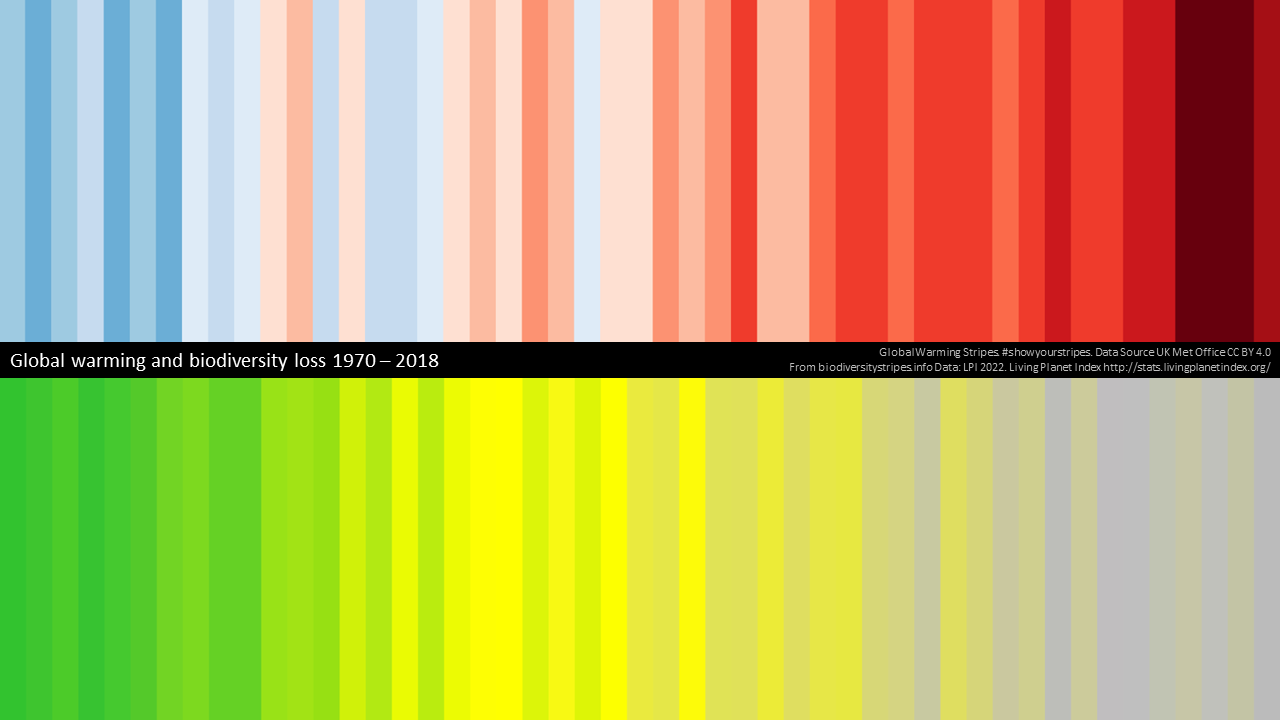
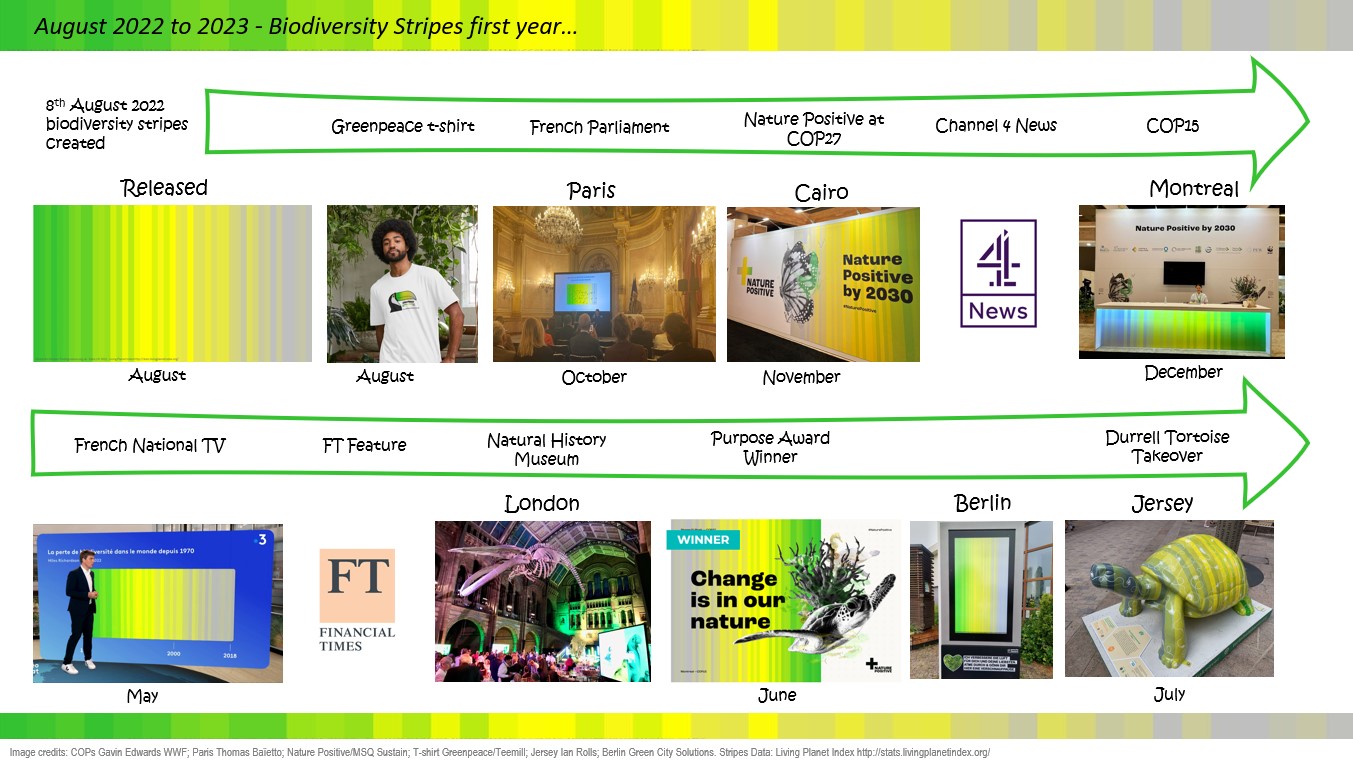
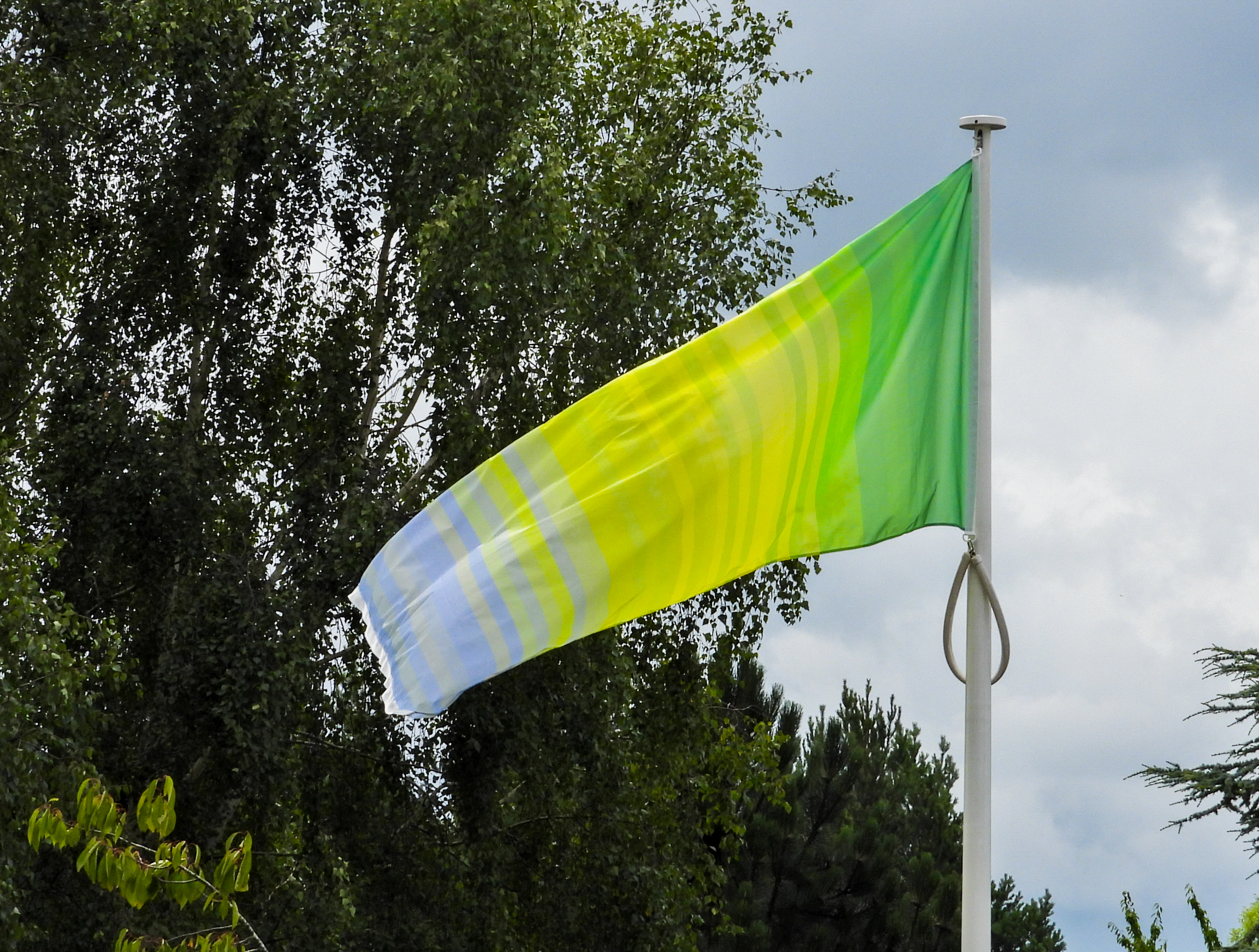
More recently I’ve developed the biodiversity stripes. They were swiftly adopted by the Nature Positive campaign led by Nature4Climate. A global effort to raise the profile of action to protect, manage and restore natural ecosystems for the benefit of the world’s peoples, the climate and biodiversity. They appeared at the COP27 Nature Zone and alongside the climate warming stripes, the biodiversity stripes decorated a baton taken to COP15 to unite the climate and nature agenda. The stripes have featured in the French Parliament and national TV.

Global Bio Stripes 1970 to 2018 – Data: Living Planet Index http://stats.livingplanetindex.org/

Overall, over 20 of our research papers have been referenced 70 or so times in 46 documents from 28 policy bodies in 12 countries, including the IPCC, WHO, EU OECD, and Governments of New Zealand, Finland and the UK.

Where Next

Since forming, the Nature Connectedness Research Group has done a great deal to show nature connection can unite both human and nature’s wellbeing, but we are always looking forwards to more research, more application and sharing – with aim to make an even bigger difference to the human-nature relationship for a more sustainable future. These steps are much more challenging, but there is momentum.
A sustainable future requires a transformational change in our relationship with nature. Large-scale social and cultural shifts are needed to meet the challenges we face in addressing the climate and wildlife emergencies. Nature connectedness captures that relationship and the principles can be applied at a wider scale across the public realm to change how people relate to the rest of the natural world. With the focus of many sustainability initiatives being on reduction and restriction, nature connection offers a positive vision of a vibrant and nature-rich world that helps people feel good and live meaningful lives.

With others, the NCRG can hopefully find a way to shape the future of our institutions, spaces, and processes: putting nature connection into education’s curricula, teaching spaces or practices; designing landscapes, urban spaces, and buildings that provide for and prompt engagement with nature; creating technologies that connect rather than disconnect humans from nature; developing health and social care services that integrate nature connection; or inspiring families, friends and communities to come together to enjoy and nurture nature.


A selection of NCRG Publications 

There have been dozens of journal papers involving approx. 20 UoD staff across a range of disciplines, here’s a selection:

Barbett, L., Stupple, E. J. N., Sweet, M., Schofield, M. B., & Richardson, M. (2020). Measuring Actions for Nature—Development and Validation of a Pro-Nature Conservation Behaviour Scale. Sustainability, 12(12), Article 12. https://doi.org/10.3390/su12124885

Barnes, C., Harvey, C., Holland, F., & Wall, S. (2021). Development and testing of the Nature Connectedness Parental Self-Efficacy (NCPSE) scale. Urban Forestry & Urban Greening65, 127343. https://doi.org/10.1016/j.ufug.2021.127343

Barrows, P. D., Richardson, M., Hamlin, I., & Van Gordon, W. (2022). Nature Connectedness, Nonattachment, and Engagement with Nature’s Beauty Predict Pro-Nature Conservation Behavior. Ecopsychology, 14(2), 83–91. https://doi.org/10.1089/eco.2021.0036

Cameron, R. W., Brindley, P., Mears, M., McEwan, K., Ferguson, F., Sheffield, D., … & Richardson, M. (2020). Where the wild things are! Do urban green spaces with greater avian biodiversity promote more positive emotions in humans?. Urban Ecosystems23(2), 301-317.

Choe, E. Y., Jorgensen, A., & Sheffield, D. (2020). Does a natural environment enhance the effectiveness of Mindfulness-Based Stress Reduction (MBSR)? Examining the mental health and wellbeing, and nature connectedness benefits. Landscape and Urban Planning202, 103886. https://doi.org/10.1016/j.landurbplan.2020.103886

Choe, E. Y., Jorgensen, A., & Sheffield, D. (2020). Simulated natural environments bolster the effectiveness of a mindfulness programme: A comparison with a relaxation-based intervention. Journal of Environmental Psychology67, 101382. https://doi.org/10.1016/j.jenvp.2019.101382

Choe, E. Y., Jorgensen, A., & Sheffield, D. (2021). Examining the effectiveness of mindfulness practice in simulated and actual natural environments: Secondary data analysis. Urban Forestry & Urban Greening, 66, 127414. https://doi.org/10.1016/j.ufug.2021.127414

Dobson, J., Birch, J., Brindley, P., Henneberry, J., McEwan, K., Mears, M., Richardson, M. & Jorgensen, A (2020). The magic of the mundane: The vulnerable web of connections between urban nature and wellbeing. Cities, 108, 102989.

Fido, D., Rees, A., Clarke, P., Petronzi, D., & Richardson, M. (2020). Examining the connection between nature connectedness and dark personality. Journal of Environmental Psychology, 101499. https://doi.org/10.1016/j.jenvp.2020.101499

Fido, D., & Richardson, M. (2019). Empathy mediates the relationship between nature connectedness and both callous and uncaring traits. Ecopsychology, 11(2), 130–137. https://doi.org/10.1089/eco.2018.0071

Garip, G., Rees, A. & Richardson, M. (2021). Development and implementation of evaluation resources for a green outdoor educational program. Journal of Environmental Education, 52(1). https://doi.org/10.1080/00958964.2020.1845588

Hallam. J., Gallagher, L., & Harvey C. (2021) ‘I don’t wanna go. I’m staying. This is my home now.’ Analysis of an intervention for connecting young people to urban nature. Urban Forestry and Urban Greening, 65, https://doi.org/10.1016/j.ufug.2021.127341

Hallam J., Gallagher, L., & Harvey, C. (2019). ‘We’ve been exploring and adventuring.’ An investigation into young people’s engagement with a semi-wild, disused space. The Humanistic Psychologist. https://doi.org/10.1037/hum0000158

Hallam, J., Gallagher, L., & Owen K. (2021). The secret language of flowers: insights from an outdoor, arts-based intervention designed to connect primary school children to locally accessible nature. Environmental Education Research. https://doi.org/10.1080/13504622.2021.1994926

Hamlin, I., & Richardson, M. (2022). Visible Garden Biodiversity Is Associated with Noticing Nature and Nature Connectedness. Ecopsychology, 14(2). https://doi.org/10.1089/eco.2021.0064

Harvey, C., Sheffield, D., Richardson, M., & Wells, R. (2022). The Impact of a “Three Good Things in Nature” Writing Task on Nature Connectedness, Pro-nature Conservation Behavior, Life Satisfaction, and Mindfulness in Children. Ecopsychology. https://doi.org/10.1089/eco.2022.0014

Keenan, R., Lumber, R., Richardson, M., & Sheffield, D. (2021). Three good things in nature: A nature-based positive psychological intervention to improve mood and well-being for depression and anxiety. Journal of Public Mental Health, 20(4), 243–250.  https://doi.org/10.1108/JPMH-02-2021-0029

Kotera, Y., Richardson, M., & Sheffield, D. (2020). Effects of shinrin-yoku (forest bathing) and nature therapy on mental health: A systematic review and meta-analysis. International Journal of Mental Health and Addiction. https://doi.org/10.1007/s11469-020-00363-4

Lumber, R., Richardson, M., & Sheffield, D. (2017). Beyond knowing nature: Contact, emotion, compassion, meaning, and beauty are pathways to nature connection. PLoS ONE, 12(5).  https://doi.org/10.1371/journal.pone.0177186

Martin, L., White, M. P., Hunt, A., Richardson, M., Pahl, S., & Burt, J. (2020). Nature contact, nature connectedness and associations with health, wellbeing and pro-environmental behaviours. Journal of Environmental Psychology, 68https://doi.org/10.1016/j.jenvp.2020.101389

McEwan, K., Richardson, M., Brindley, P., Sheffield, D., Tait, C., Johnson, S., Sutch, H., & Ferguson, F. J. (2020). Shmapped: Development of an app to record and promote the well-being benefits of noticing urban nature. Translational Behavioral Medicine, 10(3), 723–733.  https://doi.org/10.1093/tbm/ibz027

McEwan, K., Richardson, M., Sheffield, D., Ferguson, F. J., & Brindley, P. (2021). Assessing the feasibility of public engagement in a smartphone app to improve well-being through nature connection (Evaluación de la factibilidad de la implicación ciudadana mediante una app de teléfonos inteligentes para mejorar el bienestar a través de la conexión con la naturaleza). Psyecology12(1), 45-75. https://doi.org/10.1080/21711976.2020.1851878

McEwan, K., Giles, D., Clarke, F.J., Kotera, Y., Evans, G., Terebenina, O., Minou, L., Teeling, C. & Wood, W. (2021). A pragmatic controlled trial of Forest Bathing compared with Compassionate Mind Training in a UK population: impacts on self-reported wellbeing and heart rate variability. Sustainability

Muneghina, O., Van Gordon, W., Barrows, P., & Richardson, M. (2021). A novel mindful nature connectedness intervention improves paranoia but not anxiety in a nonclinical population. Ecopsychology13(4), 248-256. https://doi.org/10.1089/eco.2020.0068

Passmore, H.-A., Martin, L., Richardson, M., White, M., Hunt, A., & Pahl, S. (2021). Parental/Guardians’ connection to nature better predicts children’s nature connectedness than visits or area-level characteristics. Ecopsychology, 13(2), 103–113.  https://doi.org/10.1089/eco.2020.0033

Pritchard, A., Richardson, M., Sheffield, D., & McEwan, K. (2020). The relationship between nature connectedness and eudaimonic well-being: A meta-analysis. Journal of Happiness Studies: An Interdisciplinary Forum on Subjective Well-Being, 21(3), 1145–1167.  https://doi.org/10.1007/s10902-019-00118-6

Richardson, M. (2019). Beyond restoration: Considering emotion regulation in natural well-being. Ecopsychology, 11(2), 123–129.  https://doi.org/10.1089/eco.2019.0012

Richardson, M., & Butler, C. W. (2022). Nature connectedness and biophilic design. Building Research & Information, 50(1–2), 36–42. https://doi.org/10.1080/09613218.2021.2006594

Richardson, J. Dobson, D. J. Abson, R. Lumber, A. Hunt, R. Young & B. Moorhouse (2020) Applying the pathways to nature connectedness at a societal scale: a leverage points perspective, Ecosystems and People, 16(1), 387-401.

Richardson, M., & Hamlin, I. (2021). Nature engagement for human and nature’s well-being during the Corona pandemic. Journal of Public Mental Health, 20(2), 83–93.  https://doi.org/10.1108/JPMH-02-2021-0016

Richardson, M., Hamlin, I., Butler, C. W., Thomas, R., & Hunt, A. (2022). Actively noticing nature (not just time in nature) helps promote nature connectedness. Ecopsychology, 14(1), 8-16.

Richardson, M., Hamlin, I., Elliott, L. R., & White, M. P. (2022). Country-level factors in a failing relationship with nature: Nature connectedness as a key metric for a sustainable future. Ambio, 51(11), 2201–2213. https://doi.org/10.1007/s13280-022-01744-w

Richardson, M., Hunt, A., Hinds, J., Bragg, R., Fido, D., Petronzi, D., Barbett, L., Clitherow, T., & White, M. (2019). A Measure of Nature Connectedness for Children and Adults: Validation, Performance, and Insights. Sustainability, 11(12), Article 12. https://doi.org/10.3390/su11123250

Richardson, M., Hussain, Z., & Griffiths, M. D. (2018). Problematic smartphone use, nature connectedness, and anxiety. Journal of Behavioral Addictions, 7(1), 109–116.  https://doi.org/10.1556/2006.7.2018.10

Richardson, M., Maspero, M., Golightly, D., Sheffield, D., Staples, V., & Lumber, R. (2017). Nature: A new paradigm for well-being and ergonomics. Ergonomics, 60(2), 292–305.  https://doi.org/10.1080/00140139.2016.1157213

Richardson, M., & McEwan, K. (2018). 30 days wild and the relationships between engagement with nature’s beauty, nature connectedness and well-being. Frontiers in Psychology, 9https://doi.org/10.3389/fpsyg.2018.01500

Richardson, M., McEwan, K., & Garip, G. (2018). 30 days wild: Who benefits most? Journal of Public Mental Health, 17(3), 95–104.  https://doi.org/10.1108/JPMH-02-2018-0018

Richardson, M., Passmore, H.-A., Barbett, L., Lumber, R., Thomas, R., & Hunt, A. (2020). The green care code: How nature connectedness and simple activities help explain pro-nature conservation behaviours. People and Nature, 2(3), 821–839. https://doi.org/10.1002/pan3.10117

Richardson, M., Passmore, H.-A., Lumber, R., Thomas, R., & Hunt, A. (2021). Moments, not minutes: The nature-wellbeing relationship. International Journal of Wellbeing, 11(1), Article 1. https://doi.org/10.5502/ijw.v11i1.1267

Richardson, M., Richardson, E., Hallam, J., & Ferguson, F. J. (2020). Opening doors to nature: Bringing calm and raising aspirations of vulnerable young people through nature-based intervention. The Humanistic Psychologist, 48(3), 284–297.  https://doi.org/10.1037/hum0000148

Sheffield, D., Butler, C. W., & Richardson, M. (2022). Improving Nature Connectedness in Adults: A Meta-Analysis, Review and Agenda. Sustainability14(19), 12494. https://doi.org/10.3390/su141912494

Van Gordon, W., Shonin, E., & Richardson, M. (2018). Mindfulness and nature. Mindfulness, 9(5), 1655–1658.  https://doi.org/10.1007/s12671-018-0883-6


Posted in Uncategorized | 1 Comment

The Great Theft

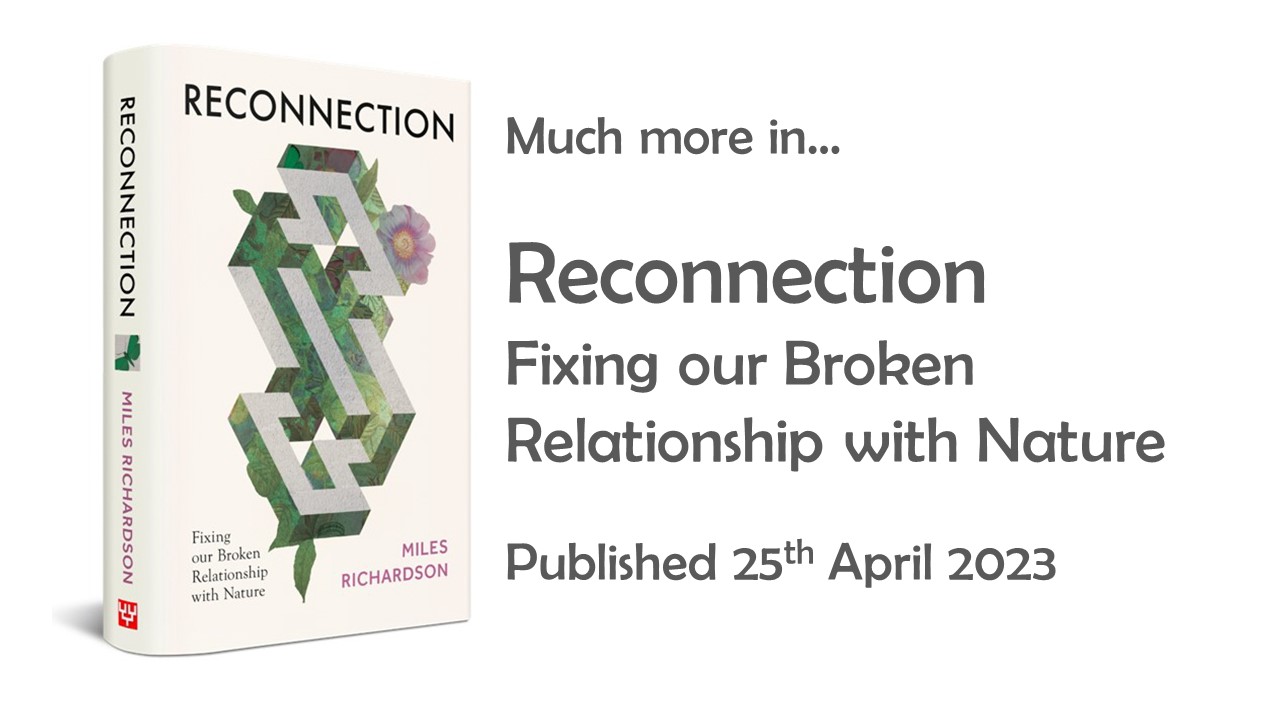
The Great Theft is a free chapter from Reconnection: Fixing our Broken Relationship with Nature which was published by Pelagic 25 April. Reconnection is split into three parts, the first covering the need for reconnection with nature, the second on the benefits of reconnection with nature and the third on creating a new relationship with nature.

The Great Theft is the second chapter and covers the Enlightenment, Scientific and Industrial Revolutions and a revolution in the way we think that separated humans from the rest of nature – ‘a single, underlying fault upon which the entire edifice of Western thought and science has been built – namely that which separates the “two worlds” of humanity and nature’, as described by Tim Ingold. A fracture so profound that it seeps into our everyday language bringing a powerful belief in the self and individuality we see throughout Western culture.

Language and folklore is powerful

Before having a read of The Great Theft, it’s worth knowing what the first chapter, A Broken Relationship with Nature covers. It opens asking whether we are a nation of nature lovers? Demonstrating how the current state of nature suggests we are not and that our relationship with nature is broken. To understand how this happened the opening chapter considers ‘the letting go’, how the human bond with nature loosened as we progressed from hunter-gatherers to farmers.


Posted in Uncategorized | Leave a comment

Out Now – Reconnection: Fixing our Broken Relationship with Nature

Reconnection: Fixing our Broken Relationship with Nature has been published by Pelagic. The formal summary and selection of reviews are below, but first a few reflections.

Writing started in a notepad on the East Neuk of Fife coast between Elie and St. Monans on August 1st 2021. Mapping out the story, a book about our relationship with (the rest of) nature, why it’s failing, why it matters and how we might fix it. A week’s leave to make some solid progress later that month was filled with walks and cycle rides. Yet, after seven months of weekends and evenings in our shed overlooking a field (often powered by Funky Radio to keep me on the one while writing about the one) the first full draft was completed spring 2022. Then, from summer ’22, into winter the final text was completed. It’s left quite a hole and at times I find myself wondering what to do with myself!

Writing Reconnection

Before the official blurb and the thoughts of others, some of my favourite parts of the book are, the working title, Nature Lovers? And writing the opening chapters, A Broken Relationship with Nature, The Great Theft, The Technological Ape and Hidden Connections with Nature. And the Preface, so far everyone seems to like the Preface!

And a few of my favourite lines:

Whereas this tree of life has flourished to many billions of lives for humans and their livestock, it is withering for other species as we extend our use and control of nature. In the forest of life, the human tree casts much shade.”

Nature is on the sidelines – quite literally at times, in the cracks beneath the billboards. Nature does not have a marketing budget. Nature has no new styles; this year’s robin is the same as the previous years.

I see trees as the ever-present foundations of a new relationship with nature, birds as our hope – a thread back to the dinosaurs, angels from an extinction. We should listen to their calls.

And the analogies about visits to the fridge and taking a slice through a mystery cake!

But more formally…

Reconnection asks, how did our relationship with nature become broken, why does it matter and how can we fix it? From a past in which we were embedded in the natural world, revolutions in farming, science and industry have seen the human bond with nature eroded with the promise of prosperity offering happiness and meaning in life. This mindset may have delivered comfortable living for many, but there is growing recognition that the root cause of wildlife loss and the warming climate is people’s disconnection from nature, which is also an important factor in our mental health. Yet solutions focus on technical fixes to treat the symptoms of that damaged relationship, such as reducing carbon emissions and increasing habitat. What we urgently need is a whole new way of thinking.

Reconnection explores our hidden links with nature and through the science of nature connectedness, sets out ways to revivify the relationship across society. Here is a route to a meaningful life that unites both human and nature’s wellbeing for a truly sustainable future. What’s more, everybody has a role to play. From business leaders to conservationists, teachers to medics, from drivers to walkers, we can all reduce the damage we do and find new ways to bring nature into our lives. Reconnection considers the problems scientifically, then offers simple, practical, positive steps for how we can all work towards a better world.

Reviews

  • Reconnection is a joy to read! It’s a thought-provoking, inspiring book which highlights the ever increasing need to step outside and re-embrace the natural world into our lives. For the benefit of individual wellbeing, for communities and for the health of our environment, I sincerely hope everybody reads this and seeks a closer relationship to nature.
    —Megan McCubbin, zoologist, conservationist and TV presenter
  • It’s so valuable to see all the studies brought together and clearly explained – not only as evidence for the instincts we already have about how much connection to nature matters, but also to dispel some myths about how that connection works (or doesn’t), and how it might be improved. I found it absolutely fascinating and I can see it making an important contribution to so many sectors.
    —Melissa Harrison, author of All Among the Barley
  • Fascinating, poignant and hopeful. Reconnection should be mandatory reading for us all.
    —Dr. Mya-Rose Craig, author of Birdgirl
  • This is a book with muscle. Not a softly aspirational book about belonging and nature but an incisively written work that examines the needs that humans have for seeing themselves as part of the natural world. Reconnection is an important book that moved me, made me think and, made me smile.
    —Sir Tim Smit, Co-founder and Vice Chairman of the Eden Project
  • Reconnection has the makings of a game-changing classic: hugely sophisticated thought and ideas framed within the most direct and simple language. Any schoolchild could understand it. In fact, all young people and everyone else concerned for the future of life on Earth should read it, if we want to end the nature crisis in our midst.
    —Mark Cocker, author of One Midsummer’s Day
  • This book is both authoritative and personal, warm and carefully scientific. It busts myths, challenges assumptions and presents truths we can no longer ignore. And crucially, Richardson offers a compelling and practical vision of what we need to do – and why – to change our relationship with Nature. This is the how-to manual and a must-read for anyone searching for the tools to improve human lives and Nature’s future.
    —Mary-Ann Ochota, broadcaster and anthropologist
  • As Miles Richardson says; nature makes sense. After reading his book you too will be in no doubt.
    —David Lindo, The Urban Birder
  • Nature Connection is such an interesting topic. Aside from the physical adventures and mental joy that nature brings, that relationship is vital for our world and it is vital that we care enough to acknowledge the damage we are doing and take urgent steps to fix it.
    —Alastair Humphreys, author of Microadventures and The Doorstep Mile
  • We’re all increasingly aware of how important our relationship with Nature is for our own good and for the good of the natural world. Instinctively we know we are not where we need to be. This book sets out in an accessible and thought provoking way the science that underpins that growing understanding and what we can all do as individuals and as a society to rebuild that relationship before it’s too late.
    —Beccy Speight, CEO, RSPB
  • Richardson has produced a rich, timely and painstakingly researched account of what’s gone wrong in our relationship with nature and most urgently, how it might be fixed. It’s never mattered more, has it? I wish every policy maker, educators, economists and land managers would read and act on this book.
    —Amy-Jane Beer, naturalist and author of The Flow
  • Miles Richardson expertly balances threat with hope in this timely and brilliant book. A must-read for anyone who values the natural world and our connection to it.
    —Hilary McGrady, Director General at the National Trust
  • Reconnection is a timely, clear plea to understand just how disconnected we have become from nature. Until it is spelled out, it is easy to assume things are not so bad, that reconnection is just a matter of being more aware. This book shows that the fracture lines go deeper and are more damaging than they might appear on the surface, but it is ultimately a hopeful book, offering solutions that make a greener future seem vibrant and joyful – worth striving for.
    —Mary Colwell, author of Beak, Tooth and Claw
  • Thought provoking, brilliantly researched, and surprising in some of its findings. Also extremely readable which, given the importance of its subject, is helpful for those of us without academic backgrounds. A must-read for educators, policy makers, and anyone else trying to raise awareness of the benefits and importance of Nature Reconnection.
    —Brigit Strawbridge Howard, author of Dancing with Bees
  • A widening separation of people from nature threatens our physical health, our mental wellbeing and the very survival of our civilisation. In Reconnection, Miles Richardson poetically and expertly explores this monumental issue of our time and how we might go about fixing it.
    —Ben Goldsmith, philanthropist and environmentalist


Available from booksellers large (you know the ones) and small, such as:


Posted in Uncategorized | 1 Comment

Only a New Relationship with Nature can Prevent a Silent Spring

Spring is a time of new relationships, between parents and their young, as new growth emerges from old. Spring also sees anniversaries for two environmentalists who emphasized people’s relationships with nature. John Muir, born April 1838, shaped people’s appreciation for wild nature. Rachel Carson, who died April 1964, highlighted the dangers of pesticides in Silent Spring, one example of a controlling relationship with nature. Despite their work, and the efforts of countless others, over two-thirds of wildlife populations have been lost since 1970 [1]. Spring has grown quieter.

Spring is a time of new relationships, but only a new relationship with nature can prevent a silent spring.

Since the early 1990s, no country has met the basic needs of its population without overconsuming natural resources [2]. The destruction of habitats and wildlife, together with climate change, show that the human-nature relationship is broken. It is dominated by use and control.

People in countries like the US and Britain have some of the weakest relationships with nature [3]. Nations that have had particularly fast levels of growth and consumption since Muir’s birth. This growth, fuelled by the use and control of natural resources, has improved our lives in innumerable ways, but at a devasting cost to the environment and our bond with nature. Over time, the language used in the books, films and songs that reflect our preoccupations and tastes refers to nature less and less [4]. Instead, we increasingly celebrate ourselves. The use of the word ‘me’ has increased four-fold since 1990 [5]. It is being human, rather than of nature, that brings meaning to our lives. People are increasingly self-interested, and we focus on using our technology to ‘fix’ the symptoms of the broken relationship, such as targeting zero carbon.

The relationship with nature that is the root cause of the environmental crises is rarely seen as a tangible target for change. Yet it is that relationship that drives our behaviour towards the natural world [6]. Corporations have used the emotions and meaning that form relationships to drive consumer behaviour for decades [7]. The consumer world is also a battle for attention between brands, products and experiences, but nature doesn’t have an advertising budget. Yet it is noticing nature, the joy and meaning that it brings, that builds the close relationship that brings pro-nature behaviours [8]. Too often in our consumer world, nature is simply a resource for recreation, an opportunity for a selfie where we can celebrate ourselves.

Our efforts to form a relationship with nature are often misguided. Outdoor adventure, enjoyed by Muir, is often assumed to improve people’s bond with nature but has been found not to [9]. Excursions such as hiking have been found to have limited benefits when compared to simpler engagement with nearby nature [10]. Similarly, environmental education does not tend to increase nature connection and pro-nature behaviours [11]. Facts and figures don’t form relationships, they can strip nature of its joy and meaning.

The division of nature to understand hides surprising and real connections that are the basis of life. Our microbiome – the myriad of microorganisms that live on and inside us – plays a vital role in our wellbeing. Each of us is a community of half human and half microbial cells in a symbiotic relationship [12]. Our bodies have an innate and unseen union with the rest of nature, such that simply viewing flowers or touching oak can be detected in physiological changes that help manage our emotions [13]. Controlled, dissected, exploited, and ignored, nature disappears from our landscapes, our lives and Spring.

Unseen connections re-emerge in Spring and relationships can be rekindled. This can begin without excursions, simply by noticing nature close to home, finding wilderness in an individual flower. A simple act that repeated can build a relationship with nature that brings sustained benefits to mental wellbeing and feelings of living a worthwhile life [14]. A relationship that unites both human and nature’s wellbeing. A society that celebrates and realises its place within nature will prevent a silent spring – a positive vision, not just a future denied the use and control of nature’s resources.


[1] WWF (2022). Living Planet Report, https://livingplanet.panda.org/en-GB/

[2] Fanning, A. L., O’Neill, D. W., Hickel, J., & Roux, N. (2021). The social shortfall and ecological overshoot of nations. Nature Sustainability, 1–11; https://sustainabilitycommunity.springernature.com/posts/draft

[3] White, M. P., Elliott, L. R., Grellier, J., et al. (2021). Associations between green/blue spaces and mental health across 18 countries. Scientific Reports, 11, 8903. https://doi.org/10.1038/s41598-021-87675-0

[4] Kesebir, S., & Kesebir, P. (2017). A growing disconnection from nature is evident in cultural products. Perspectives on Psychological Science, 12(2), 258–69.

[5] Twenge, J. M., Campbell, W. K., & Gentile, B. (2013). Changes in pronoun use in American books and the rise of individualism, 1960–2008. Journal of Cross-Cultural Psychology, 44(3), 406–15; Twenge, J. M., Campbell, W. K., & Gentile, B. (2012). Increases in individualistic words and phrases in American books, 1960–2008. PloS One, 7(7), e40181; Richardson, M. (2022,). Me, myself and nature. Finding Nature. https://findingnature.org.uk/2022/08/31/nature-versus-me/

[6] Mackay, C. M., & Schmitt, M. T. (2019). Do people who feel connected to nature do more to protect it? A meta-analysis. Journal of Environmental Psychology, 65, 101323. Whitburn, J., Linklater, W., & Abrahamse, W. (2020). Meta‐analysis of human connection to nature and proenvironmental behavior. Conservation Biology, 34(1), 180–93.

[7] Holbrook, M. B., & Hirschman, E. C. (1982). The experiential aspects of consumption: consumer fantasies, feelings, and fun. Journal of Consumer Research, 9(2), 132–40.

[8] Sheffield, D., Butler, C. W., & Richardson, M. (2022). Improving Nature Connectedness in Adults: A Meta-Analysis, Review and Agenda. Sustainability, 14(19), 12494; Richardson, M., Hamlin, I., Butler, C. W., et al. (2021). Actively noticing nature (not just time in nature) helps promote nature connectedness. Ecopsychology. https://doi.org/10.1089/eco.2021.0023; Richardson, M., Passmore, H. A., Barbett, L., et al. (2020). The green care code: how nature connectedness and simple activities help explain pro‐nature conservation behaviours. People and Nature, 2(3), 821–39.

[9] Williams, I. R., Rose, L. M., Raniti, M. B., et al. (2018). The impact of an outdoor adventure program on positive adolescent development: a controlled crossover trial. Journal of Outdoor and Environmental Education, 21(2), 207–36.

[10] Phillips, T. B., Wells, N. M., Brown, A. H., Tralins, J. R., & Bonter, D. N. (2023). Nature and well‐being: The association of nature engagement and well‐being during the SARS‐CoV‐2 pandemic. People and Nature.

[11] Otto, S., & Pensini, P. (2017). Nature-based environmental education of children: environmental knowledge and connectedness to nature, together, are related to ecological behaviour. Global Environmental Change, 47, 88–94; Barragan-Jason, G., de Mazancourt, C., Parmesan, C., et al. (2021). Human–nature connectedness as a pathway to sustainability: a global meta-analysis. Conservation Letters, e1285.

[12] Robinson, J. M., Mills, J. G., & Breed, M. F. (2018). Walking ecosystems in microbiome-inspired green infrastructure: an ecological perspective on enhancing personal and planetary health. Challenges, 9(2), 40; Sender, R., Fuchs, S., & Milo, R. (2016). Revised estimates for the number of human and bacteria cells in the body. PLoS Biology, 14(8), e1002533.

[13] Ikei, H., Song, C., & Miyazaki, Y. (2017). Physiological effects of touching wood. International Journal of Environmental Research and Public Health, 14(7), 801; Lee, J., Park, B. J., Tsunetsugu, Y., et al. (2011). Effect of forest bathing on physiological and psychological responses in young Japanese male subjects. Public Health, 125(2), 93–100.

[14] Pritchard, A., Richardson, M., Sheffield, D., & McEwan, K. (2020). The relationship between nature connectedness and eudaimonic well-being: a meta-analysis. Journal of Happiness Studies, 21(3), 1145–67; Martin, L., White, M. P., Hunt, A., et al. (2020). Nature contact, nature connectedness and associations with health, wellbeing and pro-environmental behaviours. Journal of Environmental Psychology, 68, 101389.McEwan, K., Richardson, M., Sheffield, D., et al. (2019). A smartphone app for improving mental health through connecting with urban nature. International Journal of Environmental Research and Public Health, 16(18), 3373.

Posted in Uncategorized | Leave a comment

Nature Connectedness: Latest research round-up

Major environmental institutions around the world are realising that a sustainable future requires a new relationship with nature. Recognising that the human-nature relationship is a tangible target for change that drives behaviour. The latest example is ‘Exiting the Anthropocene? Exploring fundamental change in our relationship with nature’, a milestone briefing from European Environment Agency, which is informed by our nature connectedness research and the biodiversity stripes concept – pushing environment science-policy thinking beyond what has gone before. This recognition and progress is driven by research, as demonstrated by the UN commissioned Stolkholm+50 evidence review. The increase in nature connectedness research since 2001 is remarkable, with work in this area increasingly being published in the world’s leading journals. Keeping up with the research is a challenge and in the past few weeks alone several particularly interesting papers have been published. Covering whether nature connection is weakening over time, green space versus connection, nearby nature versus excursions, the link between connection and behaviour, urban nature connection and how, despite the evidence, designing for human–nature connection is yet to become mainstream.

chart showing the increasing number of publications that contain the term nature connectedness

There is a general belief that the human-nature relationship is getting weaker over time, people are becoming more disconnected from nature over the decades. As there haven’t been regular and consistent measures over the years this can be difficult to evidence. We can infer a growing disconnection from cultural changes, such as the fall in use of nature words in books and films. Or simply the rise in damage done to the natural world, such as the 69% decline in wildlife populations since 1970.  Handily, a paper published One Earth in February presents a global analysis of the changes in people’s psychological and physical connections to nature over time. This systematic review of over 70 articles and 100 case studies indicates that there has been a decline in human connection to nature over time. With this change varying by socio-economic and geographic settings. The work concludes that a better understanding of the human-nature relationship is crucial for a sustainable future. Such that researchers and policy makers should focus efforts on addressing this failing relationship.

A key aspect of work to address the human-nature relationship is that time in nature is different to nature connection. Time and visits are straightforward measures so get used in a great deal of research, but time and visits don’t necessarily indicate a close relationship. Several of my research papers and blog posts (e.g. herehere and here) cover the crucial difference between nature contact and nature connectedness. And a recent systematic review covering 832 independent studies provides an important summary on why the difference matters and the necessity to focus on psychological nature connection for a sustainable future. Some further work published in March adds to this.

A UK study published in the International Journal of Environmental Research and Public Health also studies exposure to nature and connection with nature in tandem, therefore exploring how each explain wellbeing. After controlling for age and gender, the researchers found that greater nature connection significantly predicted lower depression and stress and improved well-being. Whereas the percentage of local green space did not significantly predict any mental health outcomes. There are many ways to measure green space and the quality and access to it matters. However, the work supports findings that indicate that nature connection is a significant component of the nature–health relationship – specifically that nature connection is linked with decreased depression, anxiety, stress and increased well-being.

Similarly, a US study published in People and Nature in February found more evidence on the benefit of nature connectedness for mental health and the need to move beyond access and excursions into nature towards engagement with nearby nature. The findings showed that nature connectedness was associated with less loneliness and greater mental health, but different types of nature engagement brought different results. In line with a previous work on simply noticing nearby nature, it was engagement with nearby nature that was linked with better mental health. While nature excursions such as camping and backpacking were linked to worse mental health. Similarly, media-based nature engagement wasn’t linked to positive benefits.

It is clear that engagement with nature, rather than simple provision of green space, is important to deliver the greatest benefits – especially the benefits important for a sustainable future. Those being increasing both human wellbeing and nature’s wellbeing through pro-nature behaviours. Supporting previous systematic reviews that have found a robust and causal link, a study published in March on pro-environmental behaviours across five countries found that a closer relationship to nature was linked to greater pro-environmental behaviour. However, further work published in Conservation Letters in March showed that priority actions for urban biodiversity conservation identified in the research, such as designing for human–nature connection, are yet to become mainstream in practice.

As the research supporting the importance of nature connectedness for a wellbeing and sustainable future increases, there is a need to understand nature connection, particularly in an urban context. Here, more recent work, again published in March, this time in Biological Conservation, explored the differences in nature connection across an urban population. Worryingly for a sustainable future, they found that it was students that exhibited the lowest nature connection. Importantly, amongst their findings was that less connected people stated that simply providing greater access to nature would not increase the nature engagement we’ve seen is crucial for building the close relationship that brings improved wellbeing and pro-nature behaviours.

The urban context is studied further in a paper published in Urban Forestry and Urban Greening in March. This study of urban green space use in Sweden found that nature connectedness was a key factor in green space use. With those people with weaker nature-connectedness more likely to perceive constraints such as danger from pests and therefore not wanting to visit green space. Conversely, those with greater nature connectedness perceived fewer constraints but wanted closer, higher quality and more peaceful green space.

Finally, February saw the publication of further research in PNAS that reminds us of the failing human-nature relationship. This work quantified the biomass of wild mammals in comparison to the mass of humanity and its livestock. The work helps dispel notions about the endless ubiquity of wildlife and provides a compelling argument for the urgency of nature conservation efforts – and a new relationship with nature.

the biomass of wild mammals in comparison to the mass of humanity and its livestock

The research above is a small sample of nature connectedness work published in the past month or so. It reflects an increasing interest from nature conservation journals, showing that the need to focus on a new relationship with nature for a sustainable future is being understood by more people, more widely. However, many still don’t see that relationship as a tangible target for change, perhaps unaware of the mounting evidence. There is though a discernible shift in science-policy thinking, going far beyond treating the symptoms of a failing relationship to seeing that improving the human-nature relationship as a tangible solution.


Soga, M., & Gaston, K. J. (2023). Global synthesis reveals heterogeneous changes in connection of humans to nature. One Earth6(2), 131-138.

Wicks, C. L., Barton, J. L., Andrews, L., Orbell, S., Sandercock, G., & Wood, C. J. (2023). The Impact of the Coronavirus Pandemic on the Contribution of Local Green Space and Nature Connection to Mental Health. International Journal of Environmental Research and Public Health20(6), 5083.

Phillips, T. B., Wells, N. M., Brown, A. H., Tralins, J. R., & Bonter, D. N. (2023). Nature and well‐being: The association of nature engagement and well‐being during the SARS‐CoV‐2 pandemic. People and Nature.

Soanes, K., Taylor, L., Ramalho, C. E., Maller, C., Parris, K., Bush, J., … & Threlfall, C. G. (2023). Conserving urban biodiversity: Current practice, barriers, and enablers. Conservation Letters, e12946.

Iwińska, K., Bieliński, J., Calheiros, C. S. C., Koutsouris, A., Kraszewska, M., & Mikusiński, G. (2023). The primary drivers of private-sphere pro-environmental behaviour in five European countries during the Covid-19 pandemic. Journal of Cleaner Production393, 136330.

Selinske, M. J., Harrison, L., & Simmons, B. A. (2023). Examining connection to nature at multiple scales provides insights for urban conservation. Biological Conservation280, 109984.

Dawson, L., Elbakidze, M., van Ermel, L. K., Olsson, U., Ongena, Y. P., Schaffer, C., & Johansson, K. E. (2023). Why don’t we go outside?–Perceived constraints for users of urban greenspace in Sweden. Urban Forestry & Urban Greening82, 127865.

Greenspoon, L., Krieger, E., Sender, R., Rosenberg, Y., Bar-On, Y. M., Moran, U., … & Milo, R. (2023). The global biomass of wild mammals. Proceedings of the National Academy of Sciences120(10), e2204892120.


Posted in Uncategorized | Leave a comment